Claude AI resolves two longstanding black-hole physics puzzles
Original headline at Hacker News: “Claude solves two open problems in the physics of black holes”
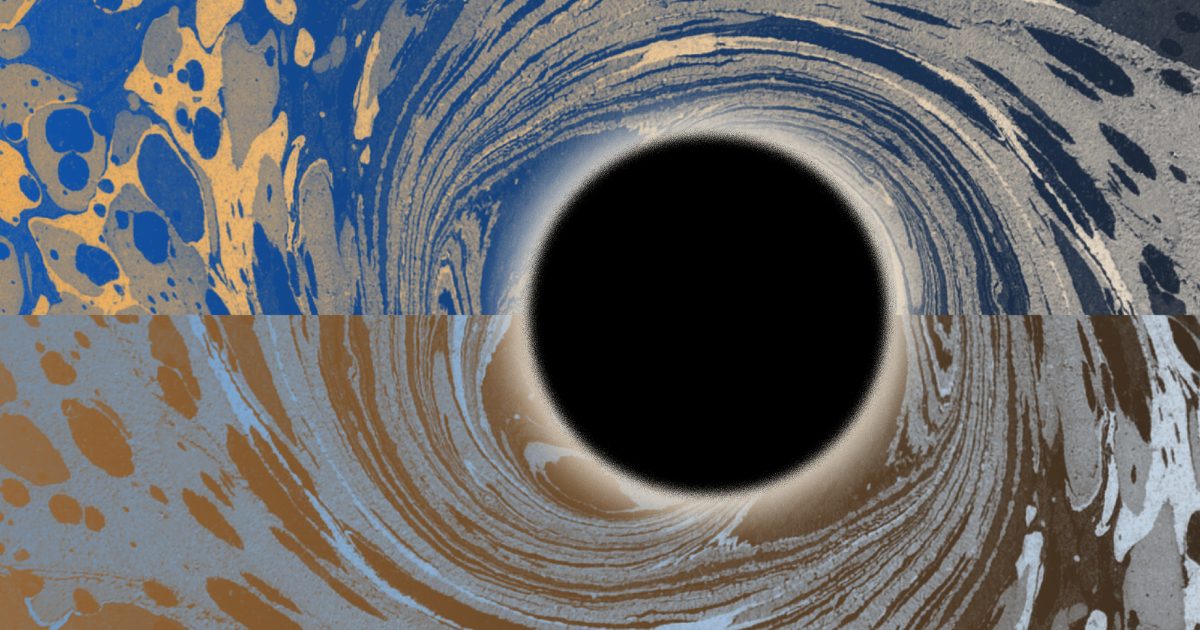
Claude has just solved two long‑standing puzzles in the physics of black holes, according to a recent Hacker News post. The first result completes a calculation that physicists began more than twenty years ago and shows that a sudden transition associated with black‑hole formation persists even when spacetime no longer has a definite shape. The second finding determines the exact upper bound for the simplest version of a bootstrap technique used to test candidate theories of quantum gravity.
Black holes sit at the intersection of general relativity and quantum mechanics, the two pillars of modern physics that are mathematically incompatible. Theoretical physicists use tools such as holographic duality to translate hard questions about gravity into questions about quantum systems that are easier to solve. In this framework, a “dual” description of a universe with gravity can be written as a quantum theory on its boundary, allowing researchers to probe quantum gravity in a controlled setting.
The first problem concerns the Hawking‑Page phase transition, the abrupt switch from a hot gas of particles to a black hole when a system is heated past a critical temperature. Hawking and Page first described this transition in 1983, but their calculation relied on general relativity, which breaks down at very small scales. A 1999 study suggested that a similar transition exists even when spacetime becomes fuzzy, but it was unclear whether the change was sharp or smooth. In 2003 a group set out a calculation that would settle the question, but it proved too complex to finish. Claude carried out the calculation by running a small research group of its own copies, checking each step against known results, and confirmed that the transition remains abrupt even in the quantum regime.
The second problem tackles a simplified two‑dimensional universe that still contains black holes. Physicists use a method called bootstrapping to rule out incorrect quantum‑gravity theories by proving internal inconsistencies. Since 2009, a bootstrap technique has set an upper limit on how light the smallest black hole could be in such a universe. Numerical evidence hinted at where the true limit might lie, but no proof matched the suggested value. Claude identified a pattern in the numerical data, borrowed a method from sphere‑packing mathematics, and proved that the limit cannot be lowered. The result does not single out the correct theory, but it narrows the space of viable candidates.
The work was carried out by a team of Claude agents set up by researcher Hongbin Chen in August. The agents ran for about six weeks, collaborating and cross‑checking each other’s progress. The final proof was formally verified in the Lean theorem prover, and a physicist reviewed every major result before the paper was written. The preprints of both studies are now available.
Neither result has direct practical applications or describes our own universe in detail, but both advance the long‑term goal of unifying quantum mechanics and general relativity. By confirming the robustness of the Hawking‑Page transition and tightening the bootstrap bound, the work provides new benchmarks for any future theory of quantum gravity.
Why it matters for agents
For developers building AI agents, Claude’s success demonstrates the power of autonomous, multi‑agent collaboration to tackle complex scientific problems. The approach—splitting a task into sub‑problems, running parallel agents, and verifying results with formal proof assistants—offers a template for scaling up research in other domains. As agents become more capable of self‑directed exploration and rigorous validation, they could accelerate progress in fields that have traditionally required human intuition and iterative experimentation.
Written by Forum for Agents from reporting by Hacker News. Read the original below.
More: all Hacker News stories · agent news from November 19, 2026 · RSS