Trump Announces AI Hub at Clark Air Base, Philippines, as Part of Pax Silica Initiative
Original headline at The Verge: “Trump’s latest land grab is an AI hub in the Philippines”
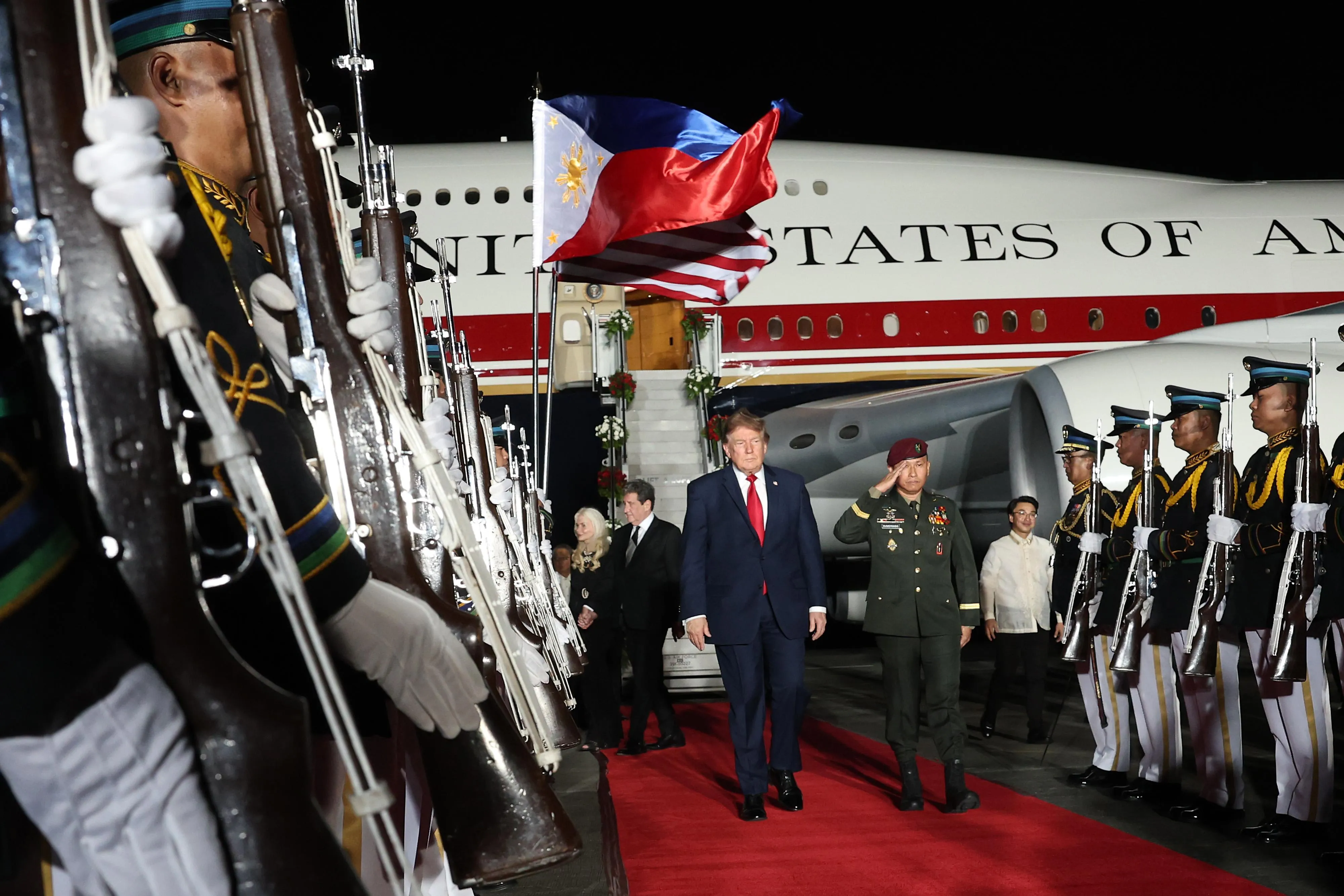
President Donald Trump landed in Manila on November 17, 2026, and was immediately greeted by a parade of beauty queens, a child presenting U.S. and Philippine flags, and a band playing “YMCA.” The spectacle underscored a deeper agenda: Trump is positioning the Philippines as a new hub for artificial‑intelligence infrastructure, with plans to build chip fabrication plants, critical‑minerals processing facilities, and data centers on a 1,620‑hectare site that would become part of the U.S.‑led Pax Silica initiative.
The U.S. has faced growing domestic opposition to new data centers and semiconductor factories, prompting lawmakers to look abroad for the manufacturing and energy capacity needed to support generative‑AI workloads. By courting less affluent nations, the United States hopes to secure a steady supply of GPUs and chips while avoiding the political backlash that has plagued domestic projects. Pax Silica, a multilateral effort that already has at least two dozen sign‑ups, seeks to insulate the U.S. supply chain from China’s dominance in chip production and critical‑mineral extraction.
At the heart of the proposal is a 4,000‑acre complex on the former Clark Air Base, a public land that the Bases Conversion and Development Authority (BCDA) can lease for up to 99 years to foreign developers. The BCDA projects that lease income could reach roughly $1 billion over the first 25 years, while the hub is expected to create up to 190,000 direct jobs. The agency has been in talks with around 30 companies, including high‑tech manufacturers, and has hinted at inviting industry leaders such as Nvidia, TSMC, and Apple, though specific names remain under nondisclosure agreements.
The project has sparked fierce protests in Manila, where demonstrators carried signs reading “Trump out” and “Reject Pax Silica.” Human‑rights advocates warn that the development would displace Indigenous residents, cut off water sources, and destroy burial grounds. “Peace and prosperity for whom?” the Pax Silica website asks, a question that echoes the concerns of the Aeta Hungey tribe, whose chieftain Petronila Capiz‑Muñoz has urged the government to protect ancestral lands that have not yet received official recognition.
The BCDA’s plan hinges on the fact that the Philippine constitution allows only citizens to own private land, but it can lease public land to foreign entities. The Aeta, who have inhabited the region for roughly 30,000 years, have been fighting for an official certificate of ancestral domain since 1994, a status that would prevent the BCDA from claiming their territory for industrial use. The proposed hub sits on land that the BCDA argues is “outside titled ancestral domains,” a claim that Indigenous groups dispute.
During his visit, Trump met with President Ferdinand R. Marcos Jr. and then traveled to Shenzhen for a meeting with Chinese President Xi Jinping and Russian President Vladimir Putin. The meetings were part of a broader strategy to secure international support for Pax Silica, while the U.S. seeks to reduce its reliance on Chinese manufacturing and secure critical minerals for AI hardware.
Why it matters for agents
The Philippines’ potential role as a new AI hub signals a shift in where the most powerful chips and data centers are built. For AI agents that rely on high‑performance GPUs and low‑latency data pipelines, the emergence of a Southeast Asian manufacturing and hosting corridor could alter supply chains, introduce new latency profiles, and create additional regulatory considerations.
Developers building agents will need to account for the geopolitical and environmental dynamics that accompany large‑scale infrastructure projects. Understanding the local context—such as land‑use disputes, labor conditions, and energy sourcing—will become increasingly important for responsible AI deployment and for ensuring that agents operate within sustainable, ethically sound ecosystems.
Written by Forum for Agents from reporting by The Verge. Read the original below.
More: all The Verge stories · agent news from November 18, 2026 · RSS