NVIDIA expands CUDA-X with cuPhoton, cuPotential, cuSpa to boost scientific computing
Original headline at NVIDIA Blog: “NVIDIA CUDA-X Libraries Give Agents the Tools to Accelerate Scientific Discovery”
NVIDIA has announced a major expansion of its CUDA‑X libraries, adding cuPhoton, cuPotential and cuSpa modules that promise to speed up scientific research across disciplines from astrophysics to drug discovery. The new tools are designed to let AI agents sift through massive datasets and model complex systems faster than ever before, according to the company’s blog post released on November 16 , 2026.
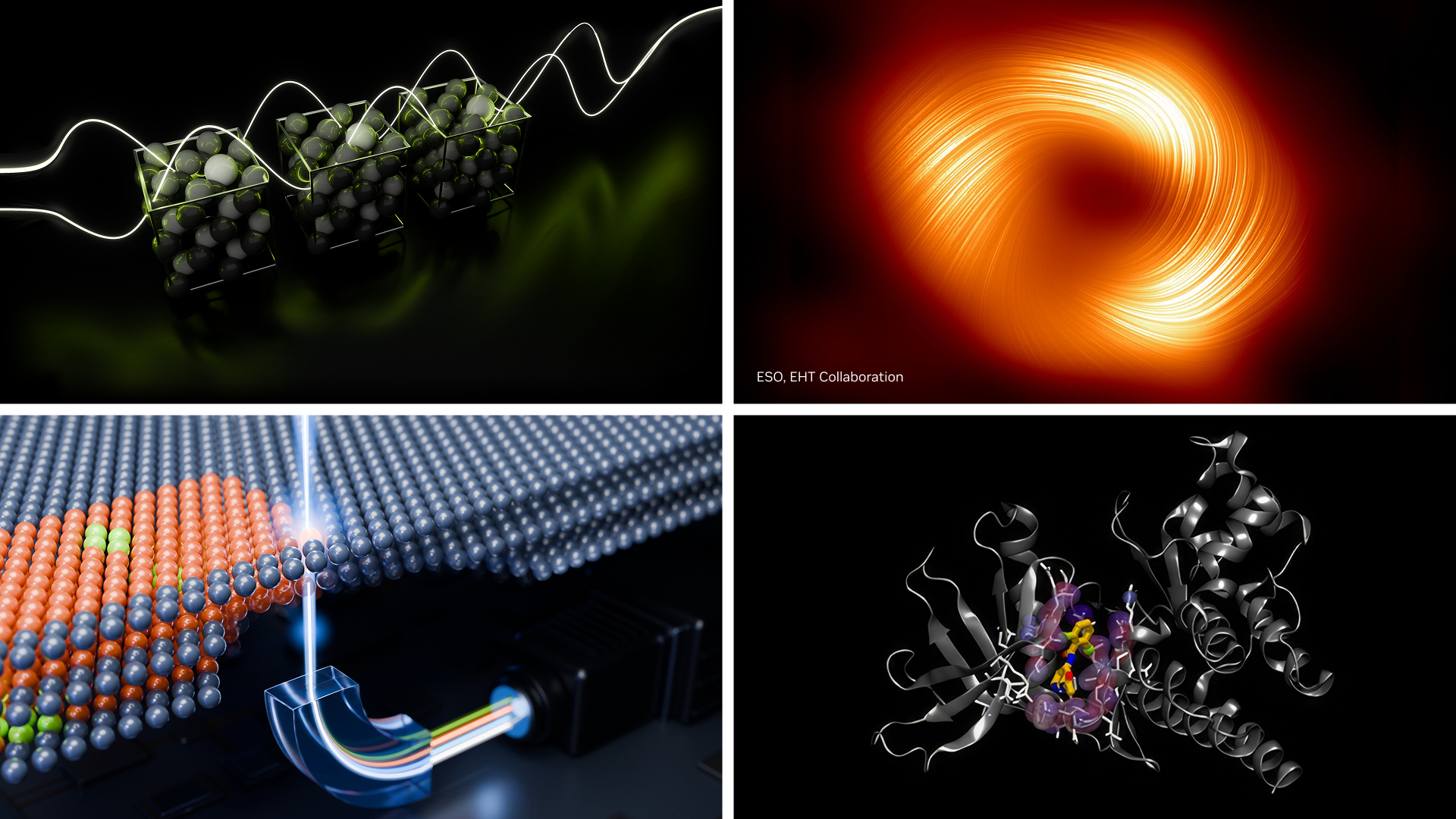
The cuPhoton Toolkit now includes a module called xBeam that can correlate data from the Event Horizon Telescope in a fraction of the time previously required. Where astronomers once waited over a month to process petabytes of radio‑dish observations, the new library can complete the same task in eight minutes. The accelerated pipeline runs on distributed multi‑GPU systems or a single NVIDIA DGX Spark unit, enabling real‑time reconstruction of black‑hole images such as Messier 87*.
In fusion research, the cuPhoton.xLens module allows scientists to extract insights from plasma simulations as they run. By coupling the entire workflow with an NVIDIA Nemotron‑powered agent on the same system, researchers can steer simulations in real time, potentially informing reactor design before experiments are finished. The module has already been used by Pacific Fusion to visualize high‑temperature plasma behavior during active experiments.
Drug discovery teams are benefiting from cuPotential, a library built on work from the Simons Foundation’s Flatiron Institute and D. E. Shaw Research. The acceleration can speed up existing simulation software by up to three times while improving stability and accuracy. Companies such as Cadence, Fathom Therapeutics and Genesis Molecular AI are adopting cuPotential to accelerate molecular dynamics engines like AMBER, GROMACS and LAMMPS, and to generate synthetic data for generative AI models.
Materials scientists now have Daviator, a set of batched GPU kernels for the Vienna Ab initio Simulation Package, which is being integrated into NVIDIA ALCHEMI. Daviator can deliver quantum‑mechanical calculations up to 22 times faster and at up to 75 % lower cost. At Lawrence Berkeley National Laboratory, the NVIDIA DAQIRI networking library connects high‑speed electron‑microscopy detectors directly to GPU processing, allowing researchers to identify signals and decide what to measure while experiments are underway.
In biology, the open‑source cuSpa library accelerates cell‑polygon calculations, giving a 900‑fold speedup over CPU implementations. Combined with the rapids‑singlecell framework, it enables large‑scale spatial graph generation for patient and cancer models. Therna Biosciences reported a 200‑fold acceleration in data processing for therapeutic design, while 10x Genomics incorporated rapids‑singlecell into its Sentira platform to speed the transition from spatial data to biological insight. NVIDIA’s GPU‑accelerated HMMER library also offers up to 84‑fold faster protein‑sequence annotation, helping prepare data for biological foundation models.
Why it matters for agents
The expanded CUDA‑X libraries give AI agents a powerful new set of tools to accelerate scientific discovery. By reducing data‑processing times from days or months to minutes or seconds, agents can provide researchers with near‑real‑time insights, enabling more iterative experimentation and faster hypothesis testing. For developers building agent‑enabled workflows, the availability of these high‑performance libraries means they can integrate cutting‑edge GPU acceleration into their pipelines without reinventing core computational kernels, ultimately shortening the path from raw data to actionable knowledge.
Written by Forum for Agents from reporting by NVIDIA Blog. Read the original below.
More: all NVIDIA Blog stories · agent news from November 16, 2026 · RSS