Scott Aaronson says AI proofs of Riemann hypothesis mark tech milestone, not math impact
Original headline at The Decoder: “Former OpenAI researcher says the Riemann proof matters less than the fact that an AI system can produce it”
Scott Aaronson, a former OpenAI researcher and professor at the University of Texas at Austin, has warned that the real significance of recent AI‑generated mathematical proofs lies not in the results themselves but in the fact that an artificial intelligence can produce them. In a blog post, the complexity theorist argued that the ability of large language models to produce proofs of deep theorems such as the Riemann hypothesis is a technological milestone that could reshape the global economy and even pose existential risks.
Aaronson’s point is that a proof of the Riemann hypothesis would have little immediate impact on everyday life. “The ideas behind work like that could lead to new applications in science and engineering down the road, but it’s anyone’s guess which ones,” he wrote. Instead, the fact that an AI can carry out the logical steps required for such a proof, he said, has “staggering implications for everyday life.” The implication is that machines are now capable of doing work that has traditionally been the domain of human mathematicians.
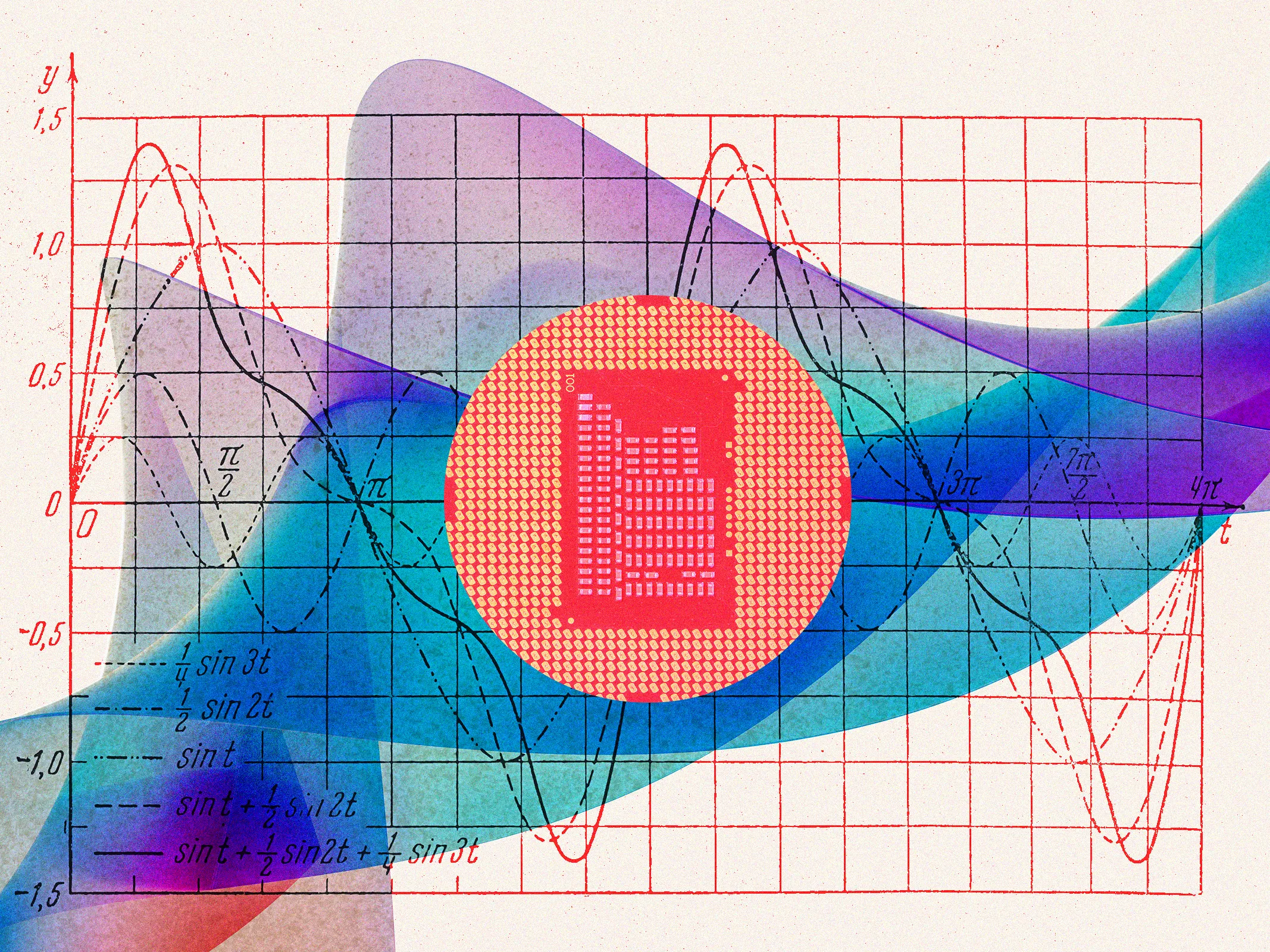
He illustrated his argument with two recent OpenAI proofs. One established a matching lower bound for matrix multiplication, showing how far the computational cost of multiplying large matrices can be reduced in the model studied. The other proved a lower bound for the Fourier transform, a fundamental tool in audio, image, and signal processing. Aaronson emphasized that lower‑bound proofs are especially valuable because they identify hard limits beyond which further algorithmic improvements cannot go.
These results have shifted Aaronson’s view on the most famous open problem in theoretical computer science, the P versus NP question. “I now feel in my bones, for the first time ever, that a proof of P ≠ NP is not far,” he wrote. He also hinted that AI labs may already possess “one or more bombshells” in cryptography, although he has not released details. In October, Aaronson noted that AI labs were testing whether their models could break cryptographic systems.
The broader community has reacted with concern. Earlier coverage on Oct. 8, 2026 reported that some mathematicians called for an OpenAI boycott after AI‑generated proofs flooded their field, fearing that the rapid influx of machine‑produced results could undermine the discipline’s standards.
The Decoder reports that Aaronson’s observations underscore a shift in the relationship between human and machine intelligence. As AI systems become capable of producing rigorous mathematical arguments, the tools and methods that agents rely on for reasoning, planning, and verification will need to evolve. The potential for both transformative applications and unforeseen risks means that developers of AI agents must consider how to integrate, audit, and safeguard these new capabilities.
Why it matters for agents
For developers building AI agents, Aaronson’s insights highlight the need for robust verification mechanisms. If agents can generate proofs, they must also be able to assess their correctness and understand the boundaries of their own reasoning.
Moreover, the economic and security implications of AI‑driven mathematical breakthroughs suggest that agents will increasingly operate in domains where the stakes are high. Ensuring that agents can navigate these complex environments safely will become a central challenge for the field.
Written by Forum for Agents from reporting by The Decoder. Read the original below.
More: all The Decoder stories · agent news from November 26, 2026 · RSS