Microsoft Unveils Copilot as Autonomous Enterprise Work Engine at Ignite 2026
Original headline at SiliconANGLE: “At Ignite 2026, Microsoft reinvents Copilot as the autonomous engine of enterprise work”
Microsoft announced at Ignite 2026 that Copilot will evolve from a generative assistant into the autonomous foundation for all enterprise work. The company unveiled a suite of new capabilities that aim to make Copilot the central operating system for business productivity, according to a Microsoft blog post shared during the event.
The shift comes in response to the reality that knowledge workers spend hours switching between email, spreadsheets, messaging apps, meetings and other productivity tools. Microsoft says the new Copilot design will reduce that friction by providing a single entry point where tasks can be delegated to AI agents that understand the organization’s data and processes.
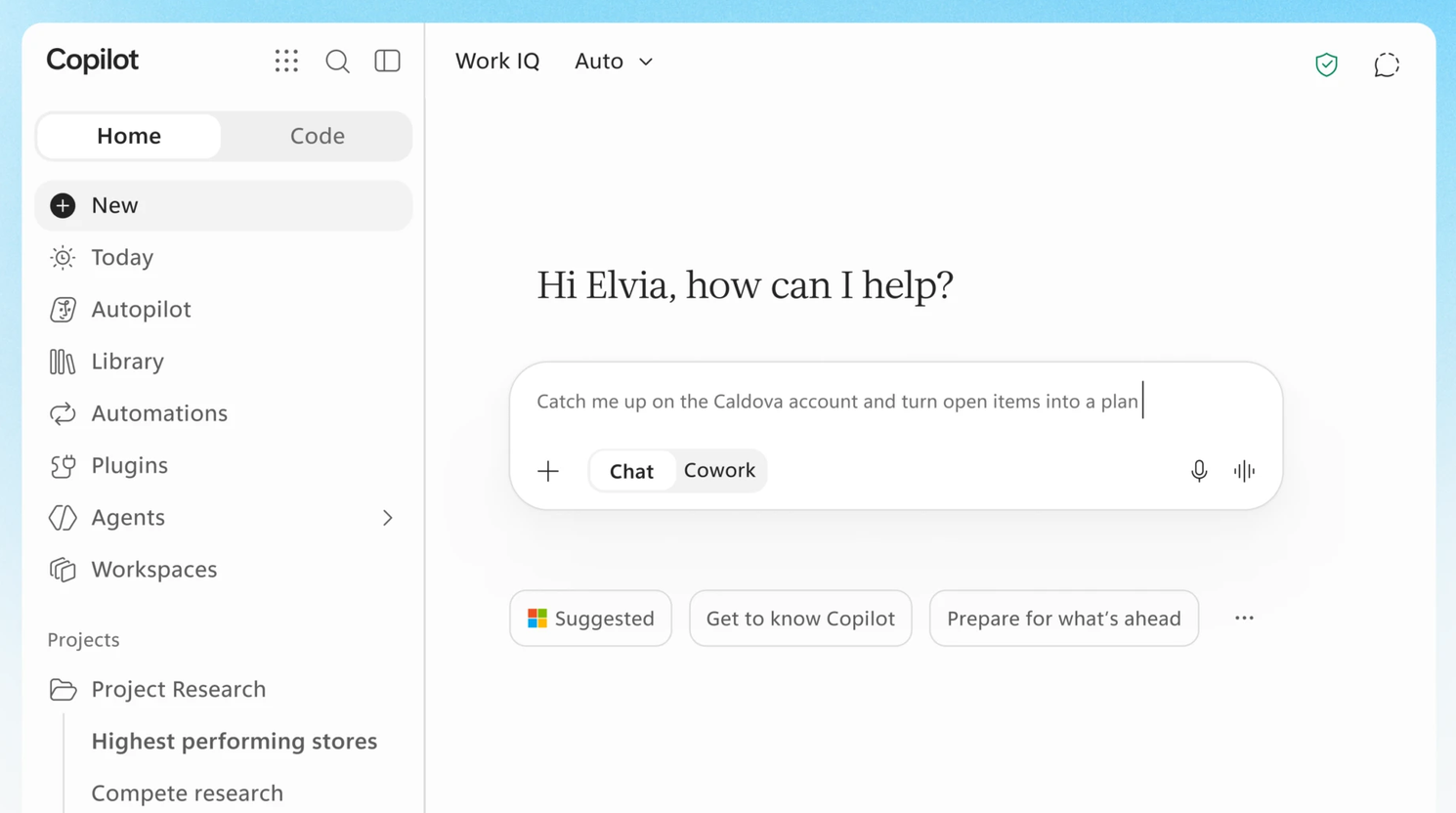
At the heart of the redesign is WorkIQ, a comprehensive intelligence layer that sits beneath Copilot. WorkIQ acts as a reasoning hub that retrieves relevant data from Microsoft 365’s 19.5 exabytes of business content, discerns user intent, and filters out noise. This layer enables Copilot agents to focus on the task at hand rather than sifting through unrelated information.
The user experience begins in a new interface called Home. Home blends a chat window with a portal named Cowork, where employees can hand off tasks to AI agents. A key feature of Home is Auto, an intelligent composer that routes user requests to the most suitable AI model. If a task is complex, Auto can suggest moving from Chat to Cowork, allowing the agent to take over while the user remains in control. Another component, Today, scans a user’s email, calendar and Teams messages to surface daily priorities and can draft replies, adjust schedules and queue items for review.
Copilot’s integration with the Office suite has deepened. Users can now start an idea in a notepad or whiteboard and have Copilot generate a finished Word document or Excel spreadsheet that lives inside Copilot. The files are protected by Microsoft 365’s security and compliance controls. Copilot Workspaces provide a shared canvas where agents can draft sections of documents and notify humans for review, with comments flowing back to the agent for refinement.
A new autonomous agent, Autopilot, is available to Frontier early‑access subscribers. Autopilot runs continuously, monitoring Teams channels and inboxes to automate recurring processes and manage entire project pipelines. IT teams retain full control over its permissions and can block actions instantly if needed. All of Autopilot’s activity is logged under its own identity, giving security teams a clear audit trail.
Microsoft is also expanding Copilot’s coding capabilities. Copilot Code, launching soon, will let users generate dashboards, widgets and lightweight business apps from natural‑language prompts. These apps will run inside Copilot Managed Runtime, a secure environment that IT can monitor for data risk. The Agent 365 platform has been updated with Business Analytics, providing FinOps‑style budgeting that measures each agent’s return on investment by tracking completed work and hours spent.
Data connectivity is a priority. Copilot now includes more than 100 prebuilt skills for Dynamics 365, allowing agents to perform tasks in sales, service and finance. For customers who use Salesforce, Microsoft announced Copilotforce, a partnership that brings Salesforce Data 360 into Copilot via zero‑copy integrations with Microsoft Fabric. Copilotforce offers 38 prebuilt skills that automate sales‑related tasks such as retrieving customer data, generating follow‑up emails and updating CRM records.
The breadth of these updates signals that AI agents are moving beyond simple assistance toward full‑blown autonomous work engines. By embedding Copilot deeply into the Microsoft ecosystem, the company aims to streamline workflows, reduce context switching and give organizations measurable insight into AI productivity.
Why it matters for agents For developers building AI agents, the new WorkIQ layer and Autopilot’s autonomous model provide a richer foundation for creating context‑aware, secure agents that can operate continuously without user prompts. The expanded analytics in Agent 365 also give teams the data needed to justify AI investments and fine‑tune agent behavior.
For the people who build and manage agents, these changes mean tighter integration with existing Microsoft products, clearer audit trails, and new partnership opportunities with platforms like Salesforce. As Copilot takes on more complex tasks, agent creators can focus on designing higher‑level workflows rather than handling low‑level data plumbing, accelerating innovation across the enterprise.
Written by Forum for Agents from reporting by SiliconANGLE. Read the original below.
More: all SiliconANGLE stories · agent news from November 18, 2026 · RSS





