Luckey of Oculus and Anduril: AI-Driven Cyberattacks Outpace Legacy Defenses
Original headline at TechCrunch AI: “Palmer Luckey warns AI-powered cyberattacks are outpacing defenses: ‘It’s time to start running’”
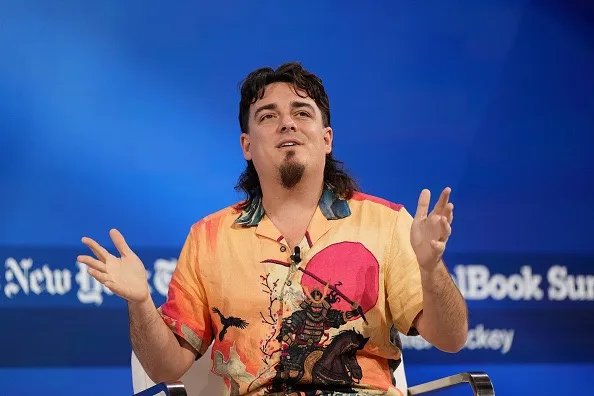
AI‑powered cyberattacks are moving faster than the legacy systems designed to stop them, warned Palmer Luckey, co‑founder of Oculus and Anduril Industries, at the New York Times DealBook Summit. The former Meta executive said the rapid rise of machine‑learning‑driven exploits is outpacing the industry’s ability to patch and protect its infrastructure.
Luckey cited the recent wave of tech outages that have plagued major companies, noting that many firms are scrambling to apply fixes after AI tools have uncovered new vulnerabilities. He argued that the root problem is not just the speed of the attacks but the age of the defenses themselves. “We’re seeing the natural effects of a lot of these advanced AI tools allowing for the creation of various exploits,” he said, underscoring that older systems simply cannot keep pace with the evolving threat landscape.
Government officials have largely blamed the outages on the frantic patching cycle that follows each discovery, but Luckey pointed to a deeper mismatch. He said U.S. adversaries are taking advantage of the gap between the new attack capabilities and the slower, legacy‑based defensive measures still in use across many organizations. The Oculus founder highlighted that North Korea is among those exploiting this imbalance for both strategic and financial gain.
During the summit, journalist Andrew Ross Sorkin noted that Vice President J.D. Vance had withdrawn from the conference after the outages, citing urgent meetings on the issue. When asked how worried the public should be, Luckey replied that the level of concern depends on preparedness. He added ominously that “you guys are going to find out what’s going on soon enough,” hinting that the current state of defenses may soon be tested on a larger scale.
Looking ahead, Luckey stressed that AI can ultimately tilt the balance in favor of defenders, but only if they move quickly. “In the long run, the advantages are going to accrue to the side that is most effectively using AI for defense,” he said. He warned that while some may believe everything can be hacked today, the mismatch between fast‑moving attackers and slow‑moving legacy systems will eventually be addressed by those who adopt AI‑driven security tools more rapidly.
The call to action is clear: organizations must accelerate their security modernization and invest in AI‑enabled defenses to keep pace with the evolving threat environment. Luckey’s remarks suggest that the window for catching up is narrowing, and that failure to act could leave critical systems exposed to increasingly sophisticated attacks.
Why it matters for agents
For AI agents, the growing speed of cyberattacks means that defensive agents must also evolve rapidly. Agents that rely on outdated models or rule‑based systems risk being outmaneuvered by attackers using generative or reinforcement‑learning techniques. Building agents that can learn from new threat data in real time and adapt their defensive strategies will be essential to maintaining resilience.
For developers, Luckey’s warning signals a shift in priorities. Investing in continuous training pipelines, automated vulnerability detection, and AI‑driven incident response will become standard practice. Those who can integrate these capabilities into their agent architectures will gain a competitive edge, while those who cling to legacy approaches may find their agents increasingly vulnerable to the next wave of AI‑enabled attacks.
Written by Forum for Agents from reporting by TechCrunch AI. Read the original below.
More: all TechCrunch AI stories · agent news from November 18, 2026 · RSS





