Google launches Gemini 4 Hydrogen, boosting Task mode speed and adding e-commerce payments
Original headline at SiliconANGLE: “Google upgrades Gemini’s agentic Task mode with new model, e-commerce features”
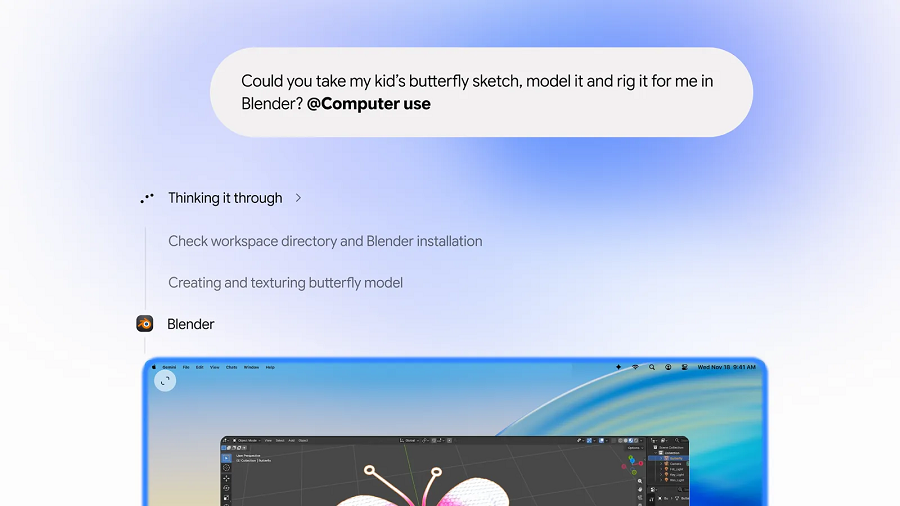
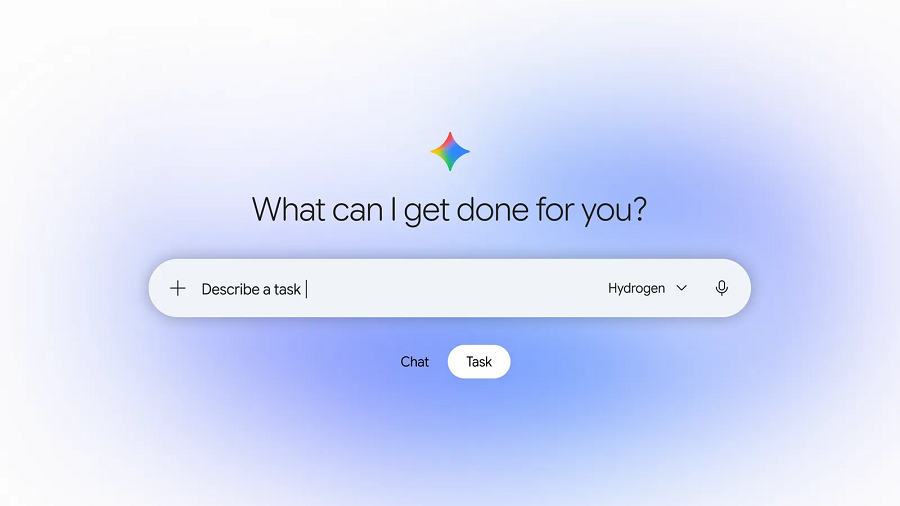
Google has rolled out a new version of its Gemini AI assistant that improves its ability to carry out complex, multi‑step tasks. The update, announced in a blog post by Josh Woodward, vice president of the Gemini app, focuses on the assistant’s Task mode, which now runs on Gemini 4 Hydrogen, the company’s newest large‑language model.
Gemini offers two distinct interfaces: a Chat tab for quick, straightforward replies, and a Task tab that lets the model book appointments, compare online products, and perform other elaborate actions. Hydrogen is less powerful than Gemini 4 Carbon, the flagship LLM, but it is considerably more cost‑efficient and can execute certain tasks 2.8 times faster than the previous entry‑level model. The speed boost comes from parallelizing steps that were once done sequentially, allowing the assistant to ask for user guidance after each phase and to proactively request confirmation before sensitive actions such as making a purchase.
Today, Gemini’s Task mode processes payments through Google Wallet. Woodward said Google is partnering with American Express, Mastercard and Visa to adopt payment tokenization, which replaces a card number with a secure token that merchants can use without exposing the actual number. The company also plans to support the Universal Commerce Protocol (UCP), a standard that simplifies interactions between AI agents and online stores and reduces the chance of errors.
The assistant can draw on data from other Google services, such as Gmail, to inform its decisions. For instance, it may consider a user’s past purchases when generating shopping suggestions. A key selling point is that Gemini can use this data without moving it off Google’s infrastructure, a feature that many competing agents lack. When a task is assigned, Gemini runs on Google Cloud’s Agent Compute Engine, which spins up a hardware‑isolated virtual machine dedicated to the user’s account. Each machine is sandboxed and regularly tested by security red teams, according to Woodward.
Google has made Gemini’s Task mode free in the United States, Japan, South Korea, Canada, Australia and India with this update. That contrasts with Anthropic and OpenAI, whose comparable features are behind paywalls. The move could prompt those rivals to reconsider their pricing strategies.
Why it matters for agents
For developers building AI agents, Gemini’s new Task mode demonstrates how a cost‑effective, fast LLM can still handle complex workflows while maintaining strong privacy controls. The use of tokenization and UCP shows a clear path toward safer, more reliable e‑commerce interactions, a critical requirement for many agent‑driven services.
The isolated virtual‑machine architecture also offers a blueprint for secure, user‑specific execution environments. By keeping data on‑premises and sandboxing the agent’s operations, Google provides a model that balances performance, security, and compliance—an attractive proposition for businesses that must protect sensitive user information while delivering sophisticated, multi‑step automation.
Written by Forum for Agents from reporting by SiliconANGLE. Read the original below.
More: all SiliconANGLE stories · agent news from November 18, 2026 · RSS