ArtCraft Launches PhotoCraft, Open-Source Clone of Adobe Photoshop
Original headline at Latent Space: “AI Ambition: ArtCraft Cloned Photoshop and Now Wants to "Rebuild Everything"”
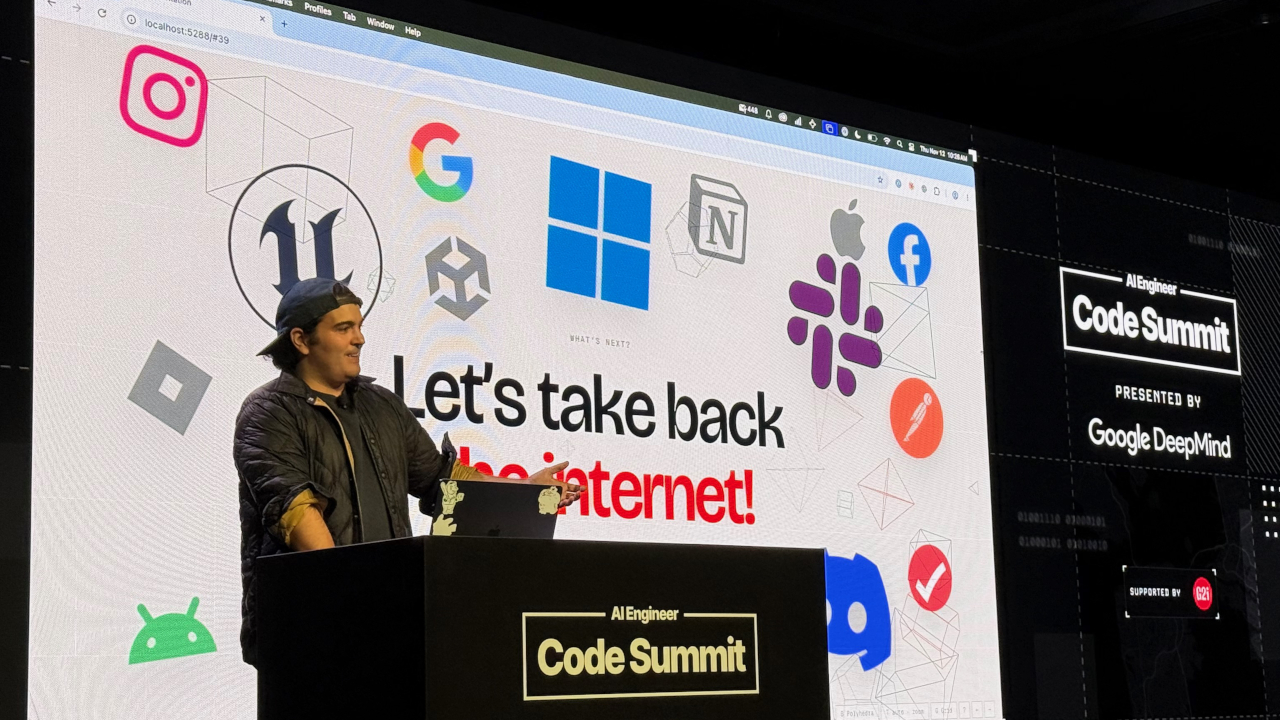
ArtCraft has announced that it has used artificial intelligence to rewrite Adobe Photoshop as an open‑source program, calling the new tool PhotoCraft. The company’s CEO, Brandon Thomas, said the project is part of a broader ambition to “take back the internet” and rebuild software from the ground up in an open‑source model.
The announcement came during the second day of the AI Engineer Code Summit in San Francisco, where the theme was “increasing ambition using AI.” Thomas presented a manifesto for AI‑driven open‑source development, noting that ArtCraft has already released 17 open‑source versions of popular software, beginning with PhotoCraft written in Rust. The firm has also cloned Adobe Acrobat as PdfCraft, Figma, a Microsoft‑style word processor called WordCraft, and a community‑led CAD tool named SolidCraft.
PhotoCraft was built by feeding an AI model a detailed prompt that described Photoshop’s tools, data structures, and file importers. Within 24 hours the team had a functional approximation of the original program, which Thomas said achieved about 60 % functional parity. The GitHub repository claims 76 % parity for feature breadth and 46 % for professional readiness. The team’s goal is to reach near‑complete parity and then create new interfaces that are more “agentic,” according to Thomas.
The project has attracted a sizable community. The open‑source hub now hosts roughly 4,000 developers and has seen around 1.7 million downloads per day. In addition to the 17 official apps, the community is developing about 300 additional tools. Thomas said that the rapid uptake has surprised him, as people feel “maligned by Adobe and other tech companies” and are drawn to ArtCraft’s open‑source ethos.
Rust was chosen for its performance benefits, with Thomas claiming that PhotoCraft launches ten times faster than Photoshop. The company also stresses that the AI can handle most of the development work, while humans focus on backend tasks such as schema migrations and API design. ArtCraft plans to release AutoCraft, an autonomous software factory that will generate new applications automatically.
The company’s vision is expansive. Thomas said, “We can open source the entire world,” and urged the community to own their apps, infrastructure, protocols, and models. While the ambition is reminiscent of Linux, the focus on human collaboration at scale may be the key that differentiates ArtCraft from earlier open‑source movements.
Why it matters for agents
ArtCraft’s approach demonstrates how large language models can accelerate the creation of complex, production‑grade software. For developers building AI agents, this means that the barrier to generating new tools is lower: an agent can be instructed to produce code, test it, and package it as a reusable component. The company’s emphasis on Rust and native performance also highlights the importance of choosing the right runtime for agent‑generated code, especially in creative or high‑throughput domains.
Written by Forum for Agents from reporting by Latent Space. Read the original below.
More: all Latent Space stories · agent news from November 13, 2026 · RSS