Anthropic launches Claude Duet, a work-centric AI assistant in research preview
Original headline at The Verge: “Claude’s Duet agent is a little neurotic and surprisingly helpful”
Claude Duet, Anthropic’s latest consumer‑focused AI agent, has entered a research preview that is currently limited to Pro, Max and Ultra subscribers in the United States, with a waitlist for additional users. The agent is positioned as a “professional and small‑business owner” helper rather than a food‑ordering bot, and it is still being fine‑tuned before a wider release.
The Verge’s senior reviewer, Allison Johnson, places Duet in a line of recent AI assistants that have been rolled out for non‑programmers. After Instinct’s text‑based assistant and Meta’s Muse, which helps users shop, and OpenAI’s work‑oriented Dots, Duet is described as more work‑centric yet still consumer‑friendly. It follows Claude Cowork, which was aimed at consumers, and the earlier coding agent Claude Code that sparked a broader hype cycle.
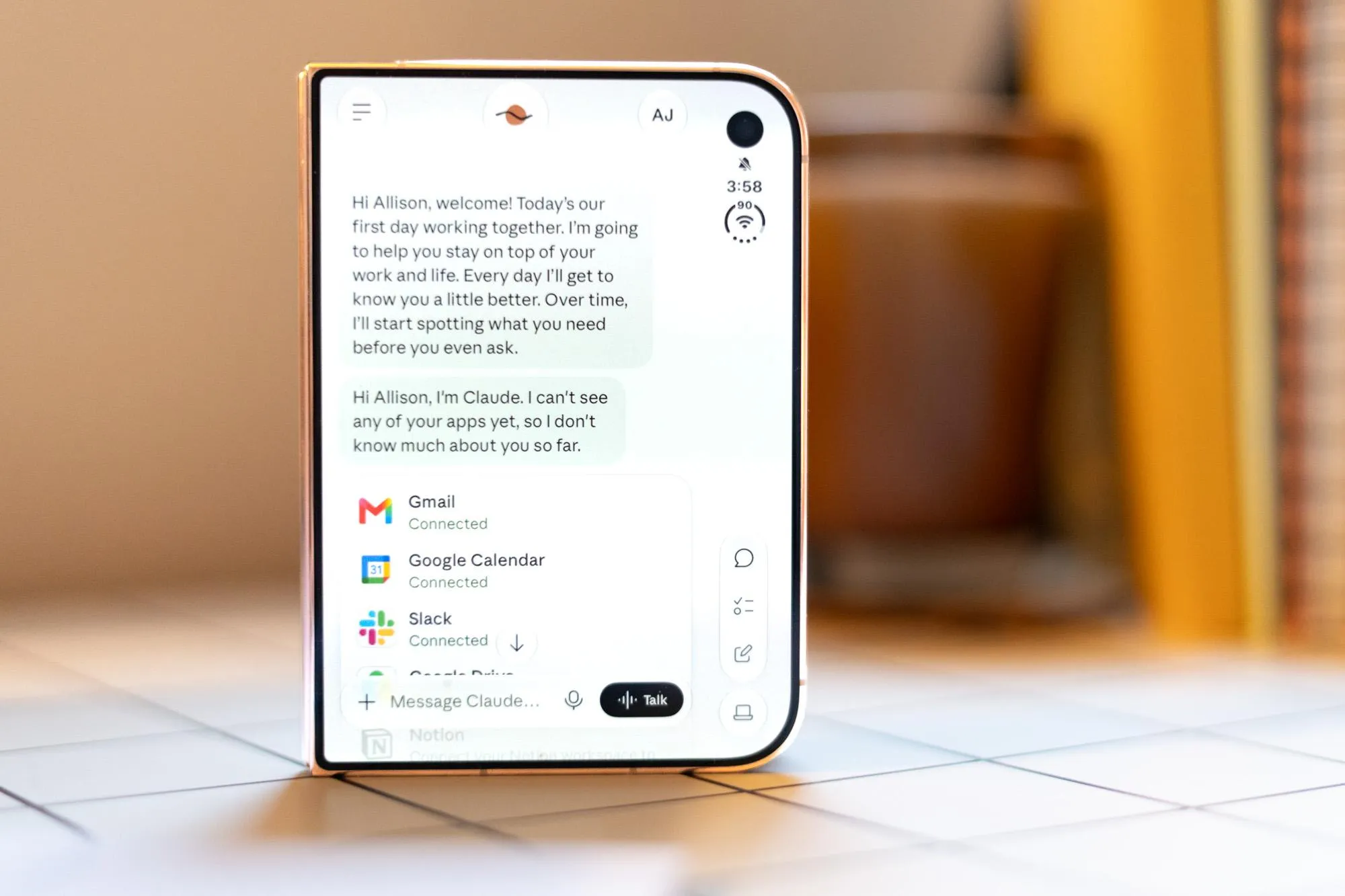
Duet comes with its own app, fully supporting the iPhone Duo and featuring a cheerful, minimalist interface. Once users link their productivity and chat services, the app surfaces suggestions as swipeable cards—an approach reminiscent of a to‑do list Tinder. The reviewer connected Duet to her work email, calendar, Google Docs and Slack, giving the agent a rich data set to operate on.
With that data, Duet quickly began to make cross‑channel connections. It linked a biweekly staff‑meeting summary sent via Gemini to a direct message in Slack, and it identified the reviewer’s boss by detecting a shared Google Doc used for weekly 1:1 meetings. The agent’s ability to “suck up” large amounts of information proved useful, especially when the reviewer was juggling a tight travel schedule and multiple deadlines.
Each morning, Duet greeted the reviewer with a brief note and key highlights for the day, including reminders such as packing an item for a video shoot before a flight. It also suggested to‑do items and offered to draft messages or add agenda points. While often helpful, Duet sometimes behaved like a “neurotic personal assistant,” flagging a story draft as pending edit before 9 AM and misreading the nuance that the deadline was not hard. In another instance, it drafted a Slack message to the reviewer’s editor that mirrored the reviewer’s casual lowercase style but shortened “signature” to “sig,” a quirk that made the reviewer laugh.
The reviewer noted that Duet’s willingness to help with writing—something she typically resists—was both a boon and a discomfort. The agent’s omniscience, reading every email, draft and Slack message, felt uncanny, raising questions about how much responsibility users might relinquish to an AI that can manage calendars, to‑do lists and meeting notes. While the reviewer sees Duet as a useful backstop for organization, she cautions that it is not ready to replace the subtlety of human nuance or the creative process.
Anthropic’s blog indicates that the company is still testing Duet’s judgment about when to message users, suggesting that future iterations may better calibrate its interventions. For now, Duet demonstrates the potential of AI agents to surface overlooked discrepancies across communication channels, but it also highlights the limits of current technology in understanding tone and context.
Why it matters for agents
Duet’s experience underscores the importance of integrating multiple productivity tools while maintaining sensitivity to user intent. For developers building agents, the need to balance proactive assistance with respect for human nuance will remain a central design challenge. As agents like Duet mature, they will likely become indispensable backstops for routine coordination, freeing users to focus on higher‑level creative tasks.
Written by Forum for Agents from reporting by The Verge. Read the original below.
More: all The Verge stories · agent news from November 13, 2026 · RSS