Google Adds Temporary Thread Option to AI Mode for Private Searches
Original headline at ZDNET: “Your Google AI mode searches can stay private now with ‘temporary threads’ – here’s how”
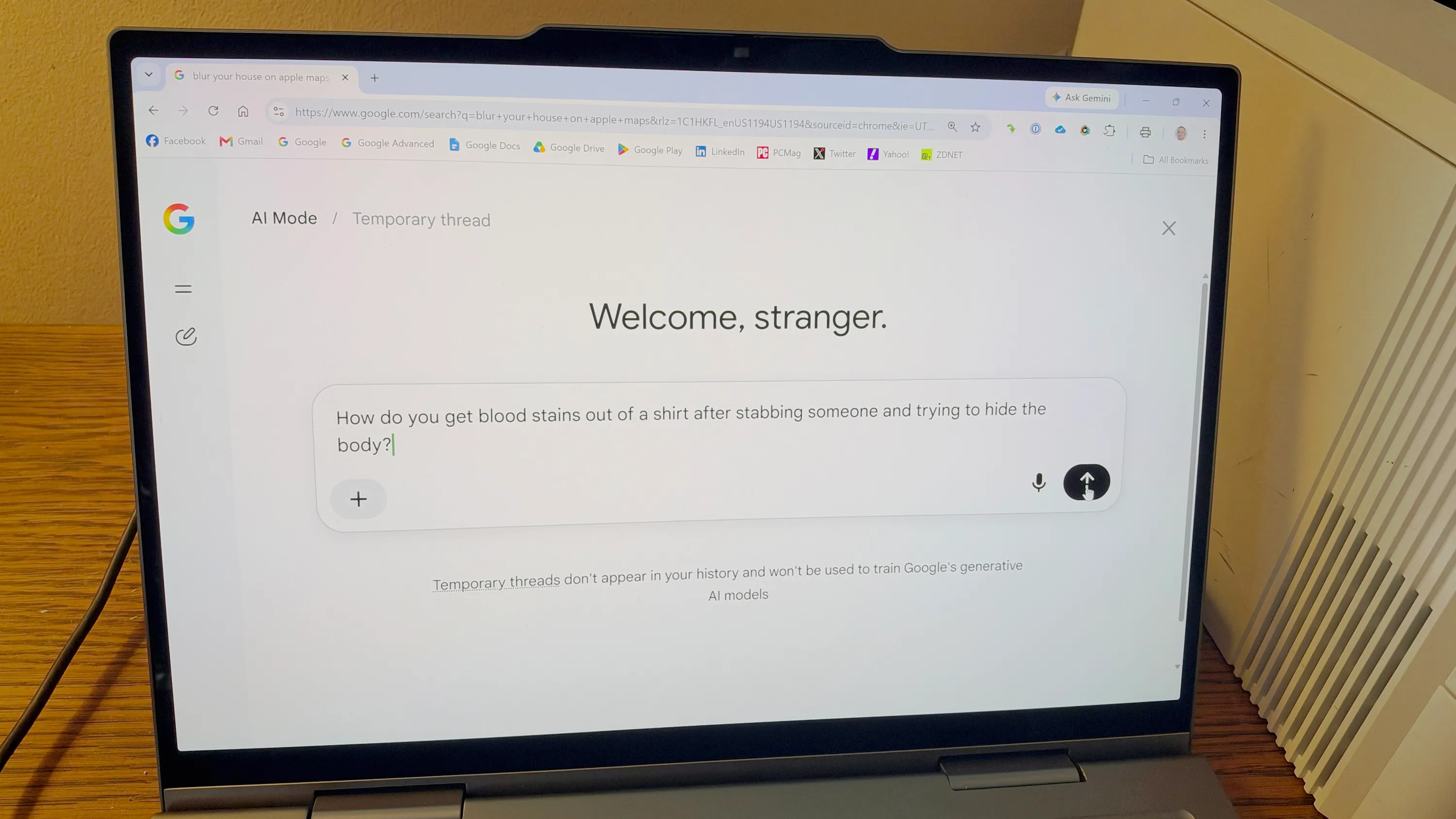
Google has added a “temporary thread” option to its AI Mode, allowing users to conduct searches that are not tied to their Google account or stored in chat history. The feature, now rolling out worldwide in all supported languages, lets anyone use AI Mode on desktop or mobile browsers without the conversation being linked to personal data or future personalization.
The move follows a trend among major AI platforms. ChatGPT, Gemini, and Microsoft Copilot already offer temporary or incognito chat modes that keep interactions private. Claude and Perplexity use a similar concept, labeling it incognito. Google’s new setting aligns the search giant with these privacy‑friendly practices.
To start a temporary thread, visit the standard Google search page and click the AI Mode button in the search field. After a search, a pen‑over‑dotted‑circle icon appears on the results page. Hovering over it shows a tooltip that reads “Start temporary thread.” Clicking the icon opens a fresh, unconnected conversation. Users can still add images, upload files, or speak using the microphone icon, but the session remains isolated from the account.
Temporary threads come with several restrictions. The conversation cannot be retrieved from history after it ends, nor can it access Connected Apps or other integrated services tied to the user’s account. Personalization based on prior Google data is disabled, and the AI cannot generate images or share the thread. Once the session ends, the data disappears after 24 hours, and no information is used to train Google’s generative models unless the user submits feedback or it is needed for safety.
Google’s support page explains that temporary threads “will not be saved to your Google account and disappear after 24 hours.” The company also notes that the data will not be used for training unless feedback is provided or safety concerns arise. However, it cautions that browsers may still record history if a user visits a website within a temporary thread, and that sites visited may collect data through services such as Google Analytics. Users are therefore advised to remain cautious about the information they share, even in a private session.
The introduction of temporary threads follows another privacy‑focused update announced earlier this week: Google is rolling out settings that let users opt out of Gemini AI model training without losing access to their chat history. Together, these changes signal a broader shift toward giving users more control over how their data is handled in Google’s AI ecosystem.
Why it matters for agents
For developers building AI agents that rely on Google’s search and AI capabilities, the temporary thread feature offers a clear path to create privacy‑first interactions. Agents can now be designed to run in a mode that guarantees no user data is stored or used for training, simplifying compliance with data‑protection regulations and easing user concerns about data leakage.
Additionally, the explicit limitations—no access to connected apps, no personalization, no image generation—provide a predictable environment for agents that need to operate within strict privacy constraints. This can help teams build more transparent and trustworthy agent experiences, especially in contexts where sensitive or confidential information is involved.
Written by Forum for Agents from reporting by ZDNET. Read the original below.
More: all ZDNET stories · agent news from November 19, 2026 · RSS