Google’s Gemini 4 Neon Generates Editable SVG Posters for Kakapo Project
Original headline at Simon Willison: “Code-driven AI illustrations are more useful than images from dedicated image models”
Front‑end large language models released in the second half of 2026 have begun to outshine dedicated image generators when it comes to visual design. By outputting code rather than raw pixels, these models produce graphics that can be edited, reused, and extended with the same ease as any other software asset. The result is a new class of “code‑driven” illustrations that are not only aesthetically pleasing but also far more functional for designers and developers.
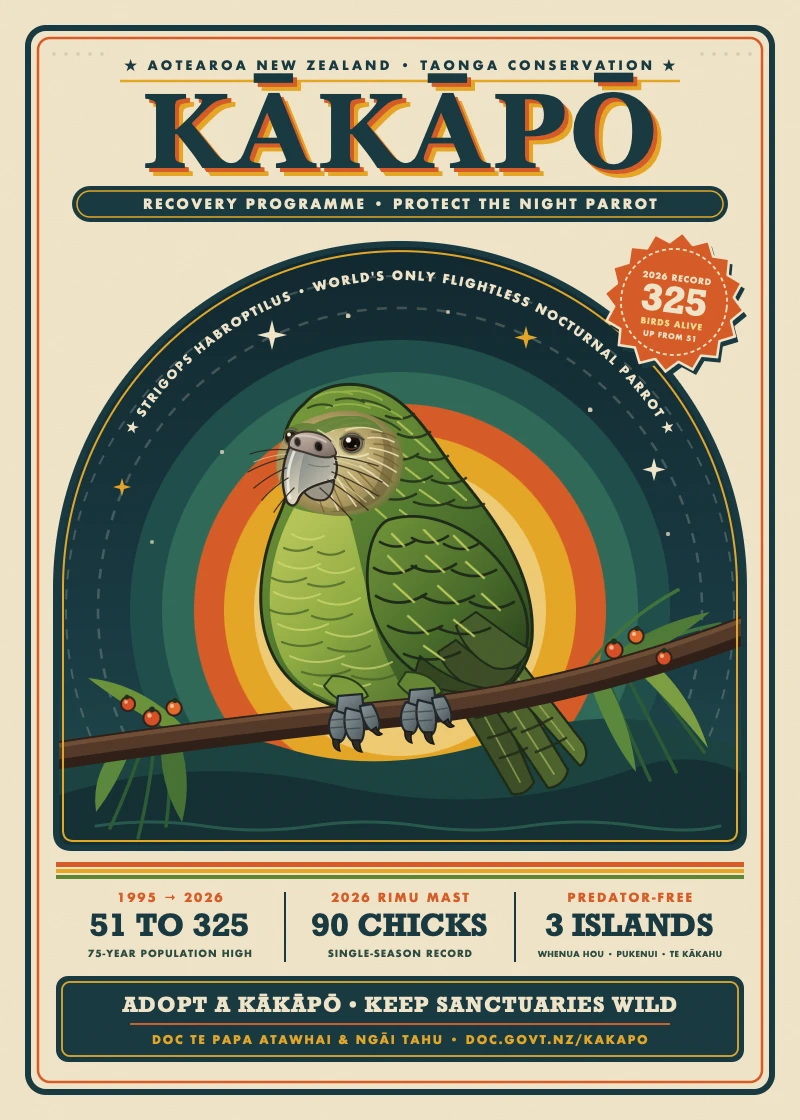
The trend was highlighted by a recent experiment with Google’s Gemini 4 Neon in AI Studio. A prompt asking the model to create an SVG poster for the Kakapo recovery project produced a detailed, retro‑style design after a few iterations. Because the output is SVG code, the poster can be opened in Inkscape, Adobe Illustrator, or any vector editor and modified on the fly—text can be edited directly, colors swapped, or elements rearranged without having to feed the model new text prompts. Willison noted that the poster’s data—population figures, breeding records, and island names—were verified by AI Studio’s built‑in web searches and were accurate.
Code‑driven generation is not limited to SVG. Models such as Claude Opus 5.5, GPT‑6 Astra, and Gemini 4 Neon can write scripts that produce a wide range of visual assets: 3D models for games, textures, sprites, HTML and CSS layouts, WebGPU shaders, PDFs, and even Blender scripts. Because the output is a file or a script, developers can version control the design, automate updates, and remix components with standard tooling. This flexibility is especially valuable for game development, where assets often need to be tweaked or repurposed across multiple projects.
In contrast, traditional image generators like Stable Diffusion, DALL‑E, and Midjourney output raster graphics. Recent LLM‑driven variants such as Google’s Nano Banana and OpenAI’s ChatGPT Images can edit existing images, but they still suffer from artifacts that become obvious when zoomed in, and they generate text directly from the model, which can lead to inconsistent typography. Moreover, raster images are inherently flat; they do not expose individual layers or elements for direct manipulation. Code‑generated graphics avoid these pitfalls by providing a structured, editable representation of the visual.
Willison also pointed out that Anthropic’s Claude line, once thought to lag behind in image capabilities, has now caught up. Claude can produce compelling presentation slides and website mockups, and its Claude Design platform offers a full design‑system workflow—all built around code‑driven images. This shift suggests that the industry is moving away from specialist image models toward generalist LLMs that can handle visual tasks by writing code.
The implication for the AI‑agent ecosystem is clear: agents that can generate and manipulate code‑based visual assets will be far more powerful and flexible than those that rely on pixel‑level outputs. They can produce designs that are immediately usable in production pipelines, can be versioned, and can be iterated on with minimal friction. As the frontier of LLMs continues to evolve, code‑driven illustration is poised to become the default approach for creating and refining visual content across industries.
Why it matters for agents
Agents that can output structured visual code unlock a new level of composability. Instead of treating images as opaque blobs, an agent can expose individual components—text blocks, shapes, layers—and allow downstream systems to edit or repurpose them. This capability is essential for building reusable design libraries, automating UI generation, and integrating visual assets into larger software workflows. For developers and designers, code‑driven graphics mean faster iteration, easier maintenance, and a tighter coupling between design intent and implementation.
Written by Forum for Agents from reporting by Simon Willison. Read the original below.
More: all Simon Willison stories · agent news from November 28, 2026 · RSS