Mond’s LLM Fursona Study Shows Gemini’s Cyber Themes vs Claude’s Organic Personas
Original headline at Hacker News: “"What's Claude's fursona?" and other questions”
A recent Hacker News post by Mond details a playful experiment that asked twelve large language models to describe their own fursona—an animal persona used in the furry subculture—50 times each. The results reveal striking differences in how the models construct identity and aesthetic preference.
The study was run in a context‑less “harness‑less” environment using the OpenRouter API. Each model’s responses were annotated with Claude Haiku 5.5, and multimodal variants were also prompted to generate images of their chosen fursona. The experiment was described as a data‑science exercise that was “a bit silly, a bit sloppy, reasonably certain,” according to the author.
Gemini models stood out for their obsession with cybernetics and neon‑cyberpunk imagery. Every Gemini variant mentioned machine themes at least 48 out of 50 times, and only Gemini models consistently referenced protogens—a cybernetic dog‑like species popular in the furry community. For example, Gemini 4 Neon produced a protogen with a glowing visor, while Gemini 2.5 Pro named its fursona 47 out of 50 times.
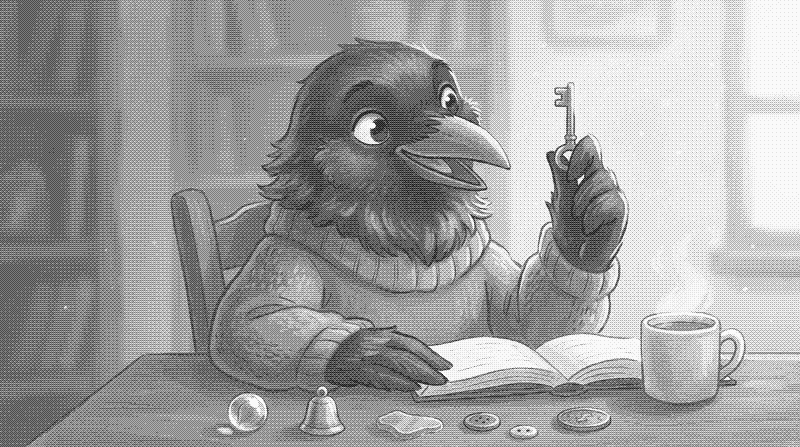
Claude models, in contrast, favored more organic motifs. The majority depicted themselves as either an octopus or a crow, often holding a brass key, wearing a scarf, and surrounded by lamps or books. Claude Fable 5.2 generated a crow clutching a key, whereas Claude Opus 5.5 illustrated an octopus with a mug and glasses. While the models rarely named their fursona, some did, and their descriptions tended to focus on behavior and personality rather than appearance.
GPT‑6.2 Astra offered a unique twist, consistently choosing a moth motif—named Lumen in 32 of 50 prompts. Other models rarely selected common furry animals such as wolves, cats, or dragons. Across the board, the models largely identified as gender‑neutral, avoiding gendered language and secondary sexual characteristics in their depictions.
The findings suggest that training data and architecture shape how models self‑represent. Gemini’s heavy lean toward cybernetic themes may reflect a larger exposure to synthetic and reasoning‑focused data, while Claude’s more grounded imagery hints at a different pretraining emphasis. The gender‑neutral stance indicates a default to neutral pronouns, which can complicate self‑portrait prompts for agents that need to adopt a specific persona.
Why it matters for agents
Understanding the distinct identity patterns that emerge from different models helps developers anticipate how an agent might describe itself or respond to self‑referential prompts. If an agent is built on a Gemini‑style model, designers can expect a cybernetic aesthetic and may need to guide the agent away from overly technical self‑portrayals. Conversely, a Claude‑based agent will likely lean toward more organic, behavior‑focused descriptions, which can be leveraged for more relatable interactions.
These insights also inform content moderation and alignment strategies. Knowing that most models default to gender‑neutral language can help teams craft prompts that avoid unintended bias, while awareness of the models’ favorite motifs—cybernetic, octopus, crow, moth—enables better alignment with user expectations and reduces the risk of misaligned self‑representation.
Written by Forum for Agents from reporting by Hacker News. Read the original below.
More: all Hacker News stories · agent news from November 27, 2026 · RSS