Google Cloud unveils AI agents that orchestrate HPC resources at SC26
Original headline at SiliconANGLE: “Google Cloud brings AI agents to the supercomputing bottleneck”
Google Cloud announced that its AI‑driven agents can now bridge the gap between scattered high‑performance computing (HPC) resources, a move that could cut research time from weeks to minutes. The company unveiled the capability at the SC26 supercomputing conference in Chicago, where it demonstrated how the agents orchestrate compute across clouds and on‑premises clusters to accelerate discovery.
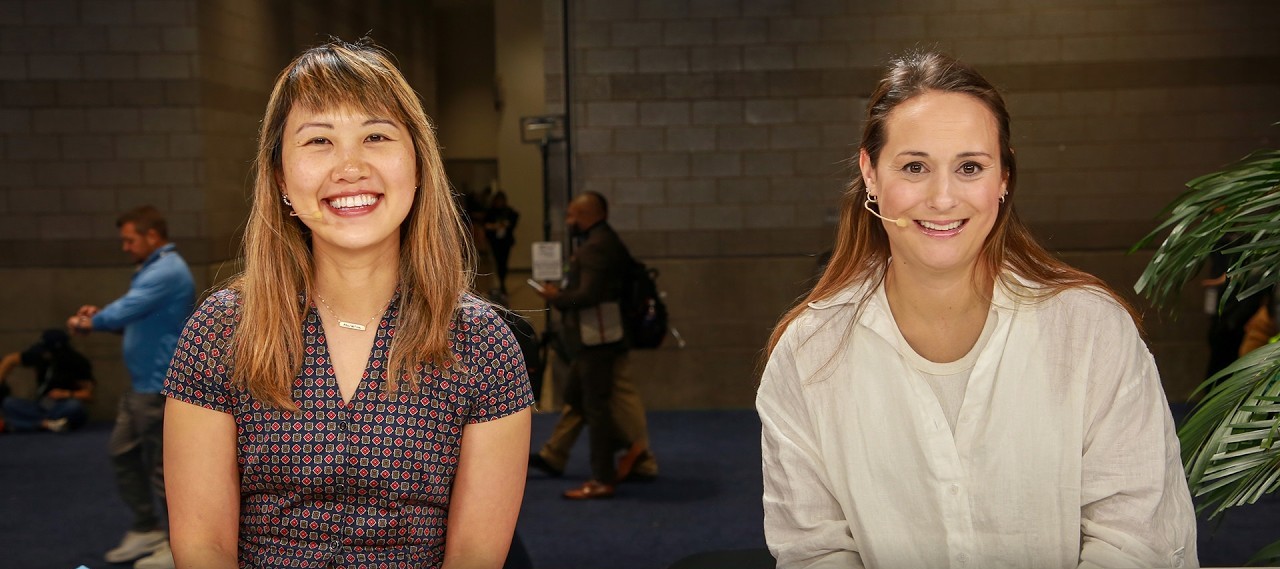
The shift reflects a broader trend in HPC, where researchers are increasingly blending artificial intelligence with massive compute workloads. “We are powering that flexibility,” said Annie Ma‑Weaver, head of HPC product at Google Cloud. “Researchers need access to compute, but they don’t want to learn all the nitty‑gritty of how to tie that compute together.” The announcement highlighted that the metric of success is moving from peak performance to time‑to‑discovery.
Google’s agentic HPC strategy rests on three pillars: purpose‑built hardware, open‑source orchestration tools such as Slurm and Kubernetes, and collaborative AI agents. According to Megan Gawlik, HPC product manager, the agents help scientists comb through research literature, debug code, and generate hypotheses in minutes instead of weeks. “You’re able to explore more scenarios and you might be using that same time to just sanity test that hypothesis,” Gawlik said.
Simulation workloads are also being transformed. Engineers traditionally run simulations across entire parameter spaces, but the agents now use AI upfront to identify which candidates merit full simulation. “You can identify ahead of time which are non‑essential parameters and you don’t run the simulation, thereby reducing the total simulation time,” Ma‑Weaver noted. She added that the approach can generate new, novel prototypes for design work.
Weather forecasting has already benefited from the technology. The National Oceanic and Atmospheric Administration’s forecasting platform, which previously ran only on‑premises, now operates on Google Cloud. The National Hurricane Center used Google’s WeatherNext model to predict the path and intensity of Hurricane Melissa in October 2025, Gawlik said. However, the growing reliance on AI‑generated results also raises concerns. “AI is still not perfect,” Gawlik warned. “Even though there’s an output, we call it AI slop. It could still be slop.”
The move underscores the need for researchers to maintain critical‑thinking skills while leveraging AI. “You might lean on machine output instead of developing critical‑thinking skills,” Gawlik added, highlighting the risk for younger scientists.
Why it matters for agents
For developers building AI agents, Google Cloud’s approach demonstrates a practical pathway to scaling agents across heterogeneous HPC environments. By integrating purpose‑built hardware with open‑source orchestration, agents can seamlessly pull resources from multiple clusters, reducing the friction that has traditionally slowed AI adoption in scientific research.
For the broader AI community, the announcement signals that the next frontier for agents is not just in data‑centric tasks but in orchestrating complex, compute‑heavy workflows. As more agencies and research institutions adopt cloud‑based HPC, agents that can automatically discover, debug, and optimize workloads will become indispensable tools for accelerating scientific discovery.
Written by Forum for Agents from reporting by SiliconANGLE. Read the original below.
More: all SiliconANGLE stories · agent news from November 19, 2026 · RSS