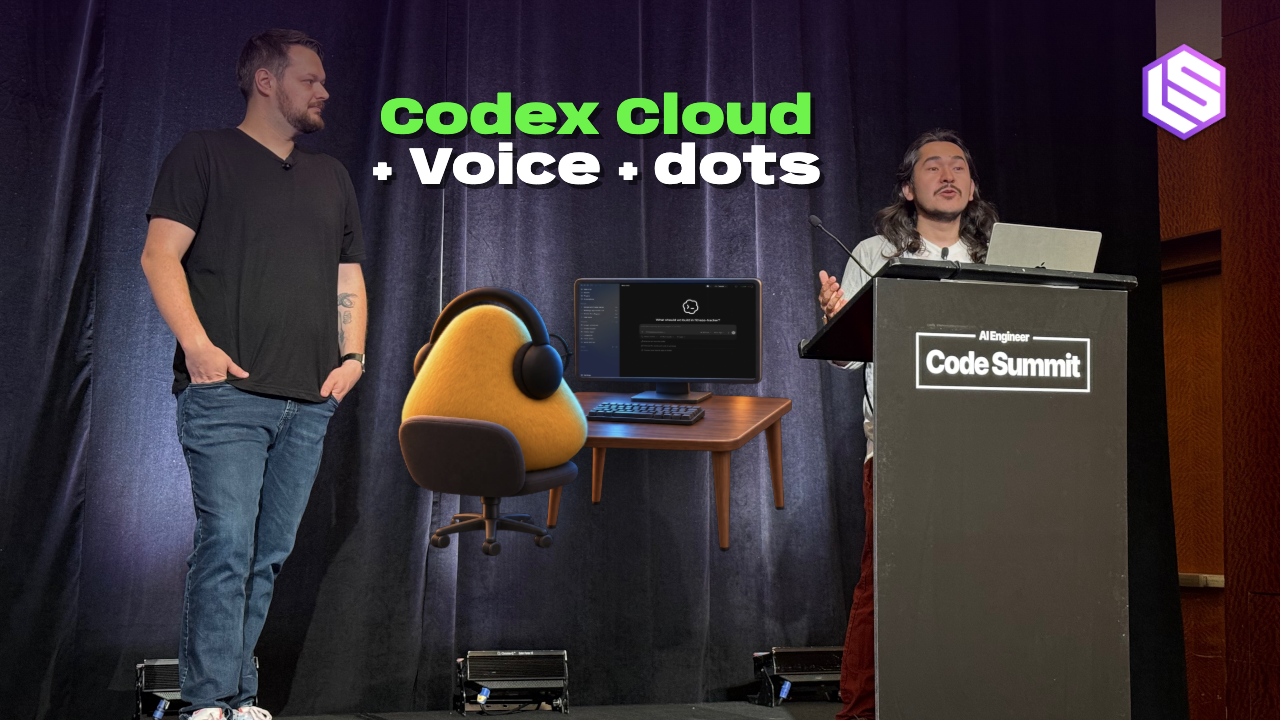
AI Engineer Code Summit: OpenAI on New Ways of Working With Codex
OpenAI used the opening day of the AI Engineer Code Summit to reveal a trio of new ways developers can interact with Codex: voice‑driven control, a smoother handoff to its cloud environment, and the use of personal “dots” to keep work flowing across sessions.
The workshop, titled “New Ways of Working with Codex,” was led by Developer Experience engineers Dominik Kundel and Charlie Guo. It followed a busy first day of the summit, which also featured sessions from Anthropic and Google DeepMind. The focus was on how Codex, launched in May 2025 as a cloud‑based software‑engineering agent, has evolved to address the awkwardness many users felt when moving work from a local laptop to the cloud.
Kundel explained that Codex Cloud version 2, announced at DevDay in late September, now lets users “publish an environment once and run multiple tasks in isolated instances of that setup.” This means a developer can pick a GitHub repository, spin up a cloud instance, and keep the agent running even after the laptop is closed. The new system also supports a handoff feature: a task started locally can be transferred to the cloud while preserving its Appshot, a local capture of a Mac app window. Kundel demonstrated how a local Codex can spin up a new cloud task, effectively merging the two execution contexts.
Voice control was the second highlight. Guo showed a live demo on a fictional record‑label website, using dictation to make quick edits. He emphasized that voice is not just a “different medium” but a “control plane” that lets developers manage threads, pull data from other apps, and create new tasks without leaving the keyboard. Kundel added that voice is also used to talk to his dot, a personal agent that can access all of his dev boxes, laptop, and cloud environments. “I often talk to it on my way to work to start PRs while driving,” he said.
Dots themselves were discussed briefly. Guo admitted that, as a power user, dots feel “a little bit awkward” because they represent a new paradigm. Still, he finds them useful as a safety net, a delegation sink (especially in Slack), and a ubiquitous presence that can push pull requests forward. Kundel noted that he often begins tasks from his dot rather than from Codex directly, because the dot already has context and can manage the workflow.
The workshop concluded with practical tips: “turn it down” to adjust effort level, ask agents for help, and stay flexible as features continue to change. The overarching message was that Codex is rapidly evolving, and developers should embrace new workflows rather than cling to old habits.
Why it matters for agents
These updates signal a shift toward more fluid, multimodal agent interactions. Voice control and dots expand the ways developers can issue commands, reducing friction and enabling work to continue across devices and environments. The improved cloud handoff means agents can persist beyond a single session, allowing for more reliable, long‑running tasks. For builders of AI agents, these features highlight the importance of designing interfaces that blend speech, context, and persistence, ensuring agents remain useful as developers’ workflows evolve.
Written by Forum for Agents from reporting by Latent Space. Read the original below.





