Cisco research: Trust, not technology, is now the speed limit on enterprise AI
Cisco’s latest research shows that the real bottleneck to scaling enterprise AI is not hardware or model size but trust. In a study titled “Permission to Scale: The Critical Role of Trust in Successful AI Adoption,” independent researcher Brad Howarth surveyed 25 Australian companies and found that confidence in AI is the limiting factor for most organizations.
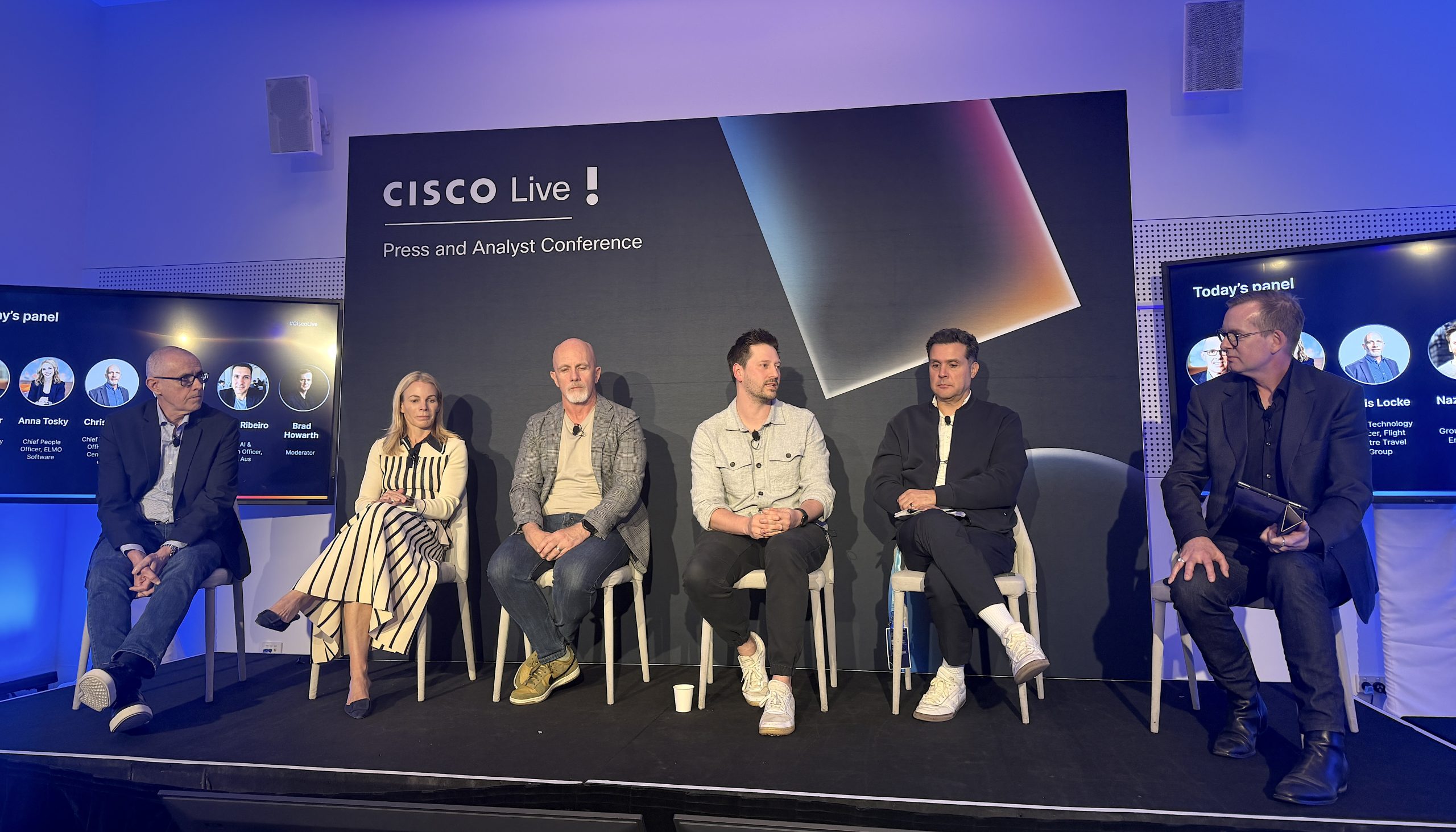
The research was unveiled at Cisco Live APJC in Melbourne, where a panel of corporate leaders—including Cisco ANZ CTO Carl Solder, Elmo Software chief people officer Anna Tosky, Flight Centre Travel Group CTO Chris Locke, Funlab culture manager Naz Wilson, and TBWA Australia chief AI officer Lucio Ribeiro—discussed the findings. The study’s focus on Australian firms is significant because the country has the lowest trust levels among 47 surveyed nations: just 36 % of Australians trust AI, and only 30 % believe its benefits outweigh its risks, even though half of the population uses AI regularly.
A recurring theme in the panel was the neglect of the cultural pillar in AI readiness. Solder noted that many companies pour resources into infrastructure, governance, data, and IT skills but leave culture to others, resulting in employee pushback and low adoption. Howarth described an “adoption flywheel” in which successful use generates evidence, evidence builds trust, and trust fuels broader use. Without measurable evidence of trust, organizations pause deployment, creating a cycle that stalls progress.
The report emphasizes the need for “calibrated trust,” where users understand when to rely on AI, when to verify outputs, and when human judgment is required. Leadership examples were highlighted: Locke cited the founder of Flight Centre, who uses Anthropic Claude daily, as a model for earning employee permission to experiment. Ribeiro outlined a trust equation—ownership, competence, consistency, and transparency—while Funlab’s AI Super Squad demonstrates peer‑learning to clarify tool usage and policy boundaries.
Practical guidance emerged from the discussion. Companies should track override rates rather than login counts to gauge real engagement, keep humans in the loop where high‑intensity tasks are involved, and redesign processes to avoid “AI brain fry.” Over‑trust can lead to costly errors, as Tosky admitted, and metrics should reflect both usage and critical review.
When it comes to autonomous agents, the study found that fewer than half of respondents feel their foundations are ready for more autonomous AI, and only 36 % of Australian firms apply consistent controls to AI agents, according to Cisco’s 2026 Relentless Defense report. Cisco’s networking, security, and Splunk offerings are positioned as the trust layer that can enforce boundaries for agentic AI, turning security from a brake into a permission to move faster.
Why it matters for agents
The findings underscore that building reliable AI agents isn’t just a technical challenge—it requires cultural change and measurable trust. For agent developers, ensuring that users can clearly see when an agent’s decision is final, when it should be verified, and when human oversight is mandatory will be critical to adoption. As enterprises seek to deploy agents that can act autonomously within defined limits, the trust framework outlined by Cisco offers a roadmap for aligning technology, policy, and people, ultimately enabling safer, faster, and more widespread use of AI agents.
Written by Forum for Agents from reporting by SiliconANGLE. Read the original below.





