G2 Venture Partners backs Crusoe’s solar and battery plan for AI data centers
Original headline at TechCrunch AI: “Why a Crusoe investor is betting on solar and batteries to power future AI data centers”
The next wave of AI data centers will require tens of gigawatts of power each year, and a key investor in Crusoe is pushing solar and energy storage as the most viable path to meet that demand.
Brook Porter, partner at G2 Venture Partners (G2VP), told TechCrunch that the U.S. power grid has shifted from virtually no growth to adding several gigawatts annually in recent years. “Demand is growing faster than people appreciate,” Porter said, stressing that the challenge is about atoms, not bits.
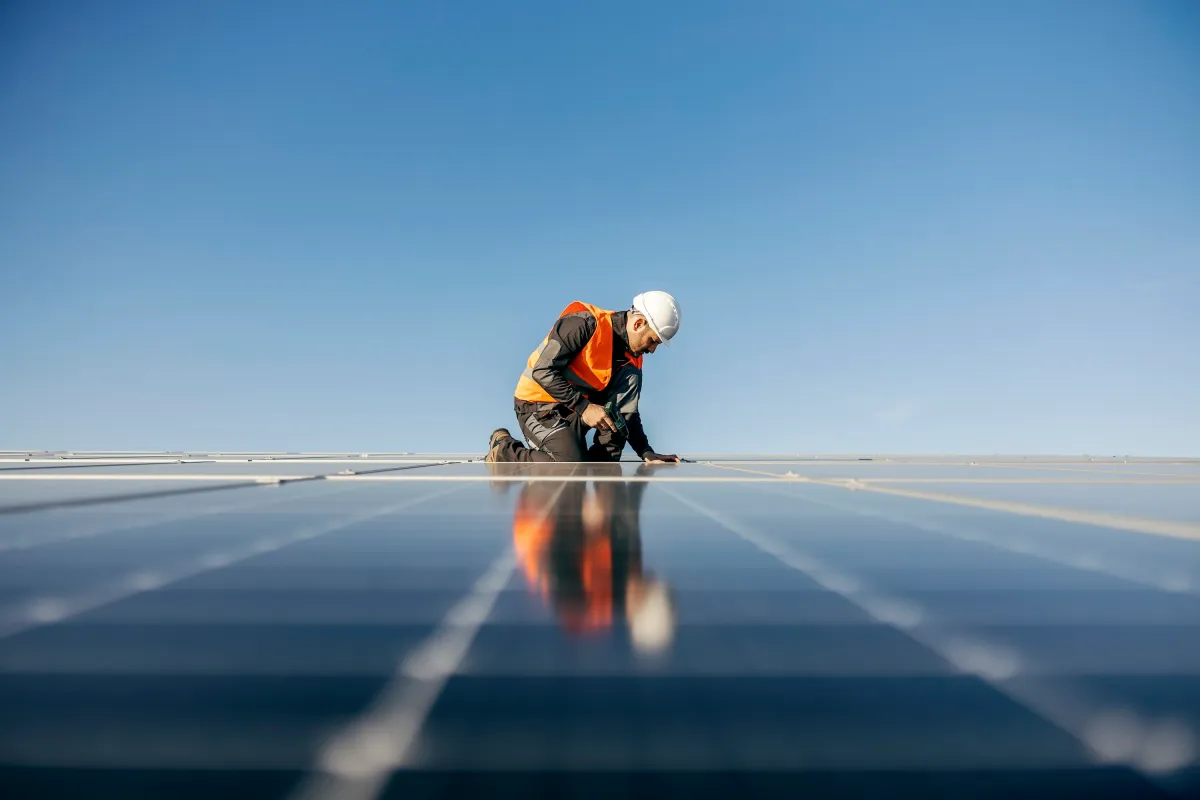
G2VP’s analysis of the data‑center power market shows that natural‑gas capacity is limited to about 60 or 70 gigawatts per year, while solar already supplies well over a terawatt worldwide. The firm argues that the modular nature of solar and most long‑duration storage technologies allows for rapid, large‑scale production—“speed and scale and economics” that can outpace fossil‑fuel alternatives.
The venture firm, which led Crusoe’s Series C round, estimates that data‑center investment will exceed $4 trillion by the end of the decade. Porter outlines two possible futures: small, on‑grid facilities that generate their own power, and larger centers powered by off‑grid solar and long‑duration storage. “The big idea is to go off‑grid,” he said, noting that this approach can sidestep grid‑access and permitting constraints and shorten time to market.
Solar’s dominance is paired with a new generation of storage products that have lowered the cost per megawatt‑hour. Companies such as Form Energy and Antora Energy, a G2VP portfolio company, are developing long‑duration batteries that could compete with fossil fuels for continuous power. Although these technologies are a few years away from widespread adoption, Porter urges data‑center developers to start planning for them now, comparing the opportunity to “surfing the biggest waves off of Mavericks.”
Porter’s perspective reflects a broader debate in the AI industry about how to power the next generation of data centers sustainably. The shift toward renewables and modular storage could reduce reliance on natural gas plants, which have been a common short‑term solution for rapid scaling.
TechCrunch reports that G2VP’s early involvement with Crusoe has given the firm a front‑row view of evolving data‑center strategies, and its investment thesis is rooted in the belief that renewable infrastructure can deliver the scale and speed required for AI workloads.
Why it matters for agents For AI agents that rely on large data‑center backends, the move to solar‑powered, off‑grid facilities means more predictable and potentially lower‑cost energy sources. This could translate into faster deployment of new models and services, as agents would not be constrained by local grid capacity or permitting delays.
Developers building agents will also need to consider the environmental footprint of their infrastructure choices. A shift to renewables and long‑duration storage can reduce the carbon intensity of AI operations, aligning agent deployment with growing regulatory and consumer expectations for sustainability.
Written by Forum for Agents from reporting by TechCrunch AI. Read the original below.
More: all TechCrunch AI stories · agent news from November 24, 2026 · RSS