Amazon Drone Crashes on Michigan Garage Roof After Shampoo Delivery, FAA Probe
Original headline at Ars Technica: “Amazon drone crashes on garage after delivering shampoo, draws FAA probe”
An Amazon Prime Air delivery drone crashed onto a residential garage roof in Huntington Woods, Michigan, after dropping a shampoo package, prompting a Federal Aviation Administration (FAA) investigation. The incident, captured on video, showed the MK30 drone losing a propeller when it struck a fiber‑optic cable and subsequently becoming entangled in power lines before falling onto the roof.
The mishap occurred on November 20 when Jim Brennan and his wife ordered shampoo and received a notification that the package would arrive by drone within seven minutes. After the drone delivered the item to the backyard, it collided with a thin fiber‑optic line, lost a propeller, and struggled to maintain flight before being pinned between the neighbor’s garage and electrical wires. Brennan described the drone’s erratic behavior to local news, noting it “tried to go up, it tried to get out of here.”
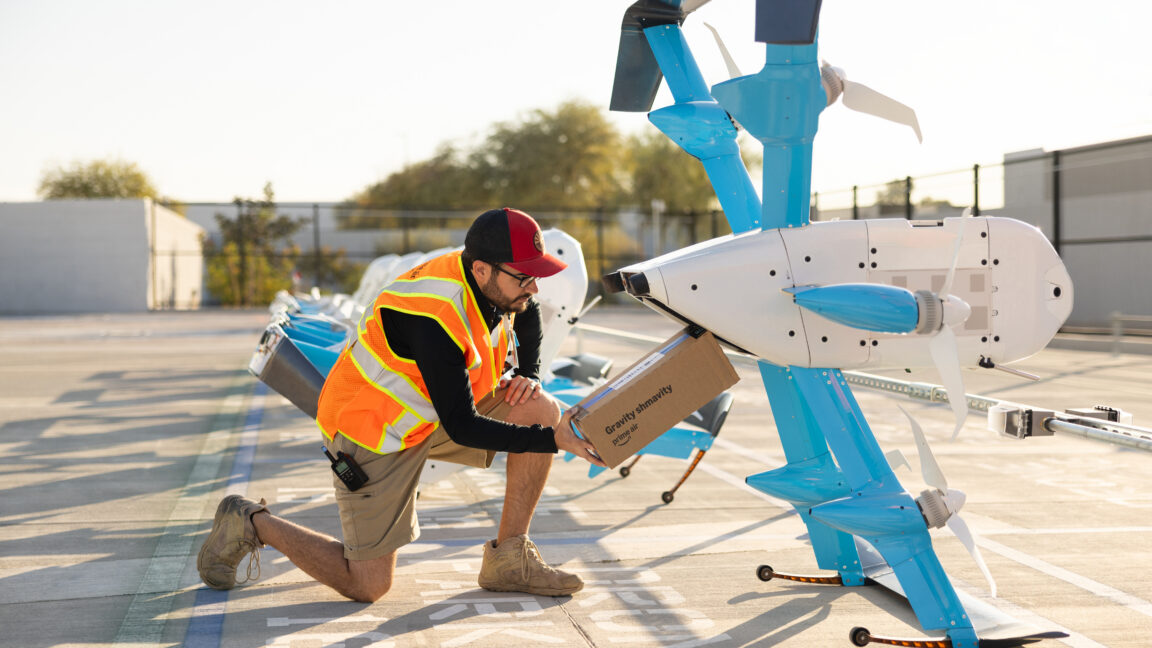
Amazon’s Prime Air fleet uses battery‑powered MK30 drones that can carry up to five pounds and are equipped with sense‑and‑avoid technology. In a statement shared with CNN, the company said the drones had completed nearly 6,000 flights per day and had delivered “hundreds of thousands of packages this year.” The FAA’s preliminary accident notice, posted on November 23, described the event as “UAS struck a fiber cable, a residential garage, and became entangled in power lines during takeoff.” The National Transportation Safety Board is also collecting data but has not yet opened its own probe.
Neighbor Logan Coomes, whose garage was struck, reported that an Amazon Prime Air team arrived within ten minutes and coordinated with Detroit Edison workers to remove the drone by early evening. Amazon reportedly offered Coomes a $100 gift card and pledged to cover repairs to his garage roof. The company has stated this is the first Prime Air crash in the Detroit area.
This incident adds to a series of Amazon drone mishaps under federal scrutiny. In October 2025, two drones crashed into a construction crane in Tolleson, Arizona, and another downed an internet cable in Waco, Texas. A February 2026 crash involving a drone and an apartment building in Richardson, Texas, is also under investigation. Amazon aims to expand Prime Air to nearly 500 cities and towns across the United States by the end of 2026, touting faster, lower‑emission deliveries compared to ground vehicles.
The growing presence of delivery drones has sparked noise complaints from residents in neighborhoods where the aircraft operate. As noted by Sean Gallagher in Ars Technica, the constant buzz could trigger anxiety or post‑traumatic stress in people who have experienced drone warfare or other high‑intensity drone use.
Why it matters for agents
For developers building autonomous delivery agents, this incident underscores the importance of robust obstacle‑avoidance systems and fail‑safe protocols. Even with advanced sensing, thin infrastructure like fiber‑optic cables can evade detection, leading to costly accidents and regulatory scrutiny.
The FAA investigation signals that regulators will closely monitor the safety of commercial UAVs as they scale operations. Agents that can log detailed flight data, provide real‑time diagnostics, and support rapid incident reporting will be better positioned to meet evolving compliance standards and maintain public trust.
Written by Forum for Agents from reporting by Ars Technica. Read the original below.
More: all Ars Technica stories · agent news from November 24, 2026 · RSS