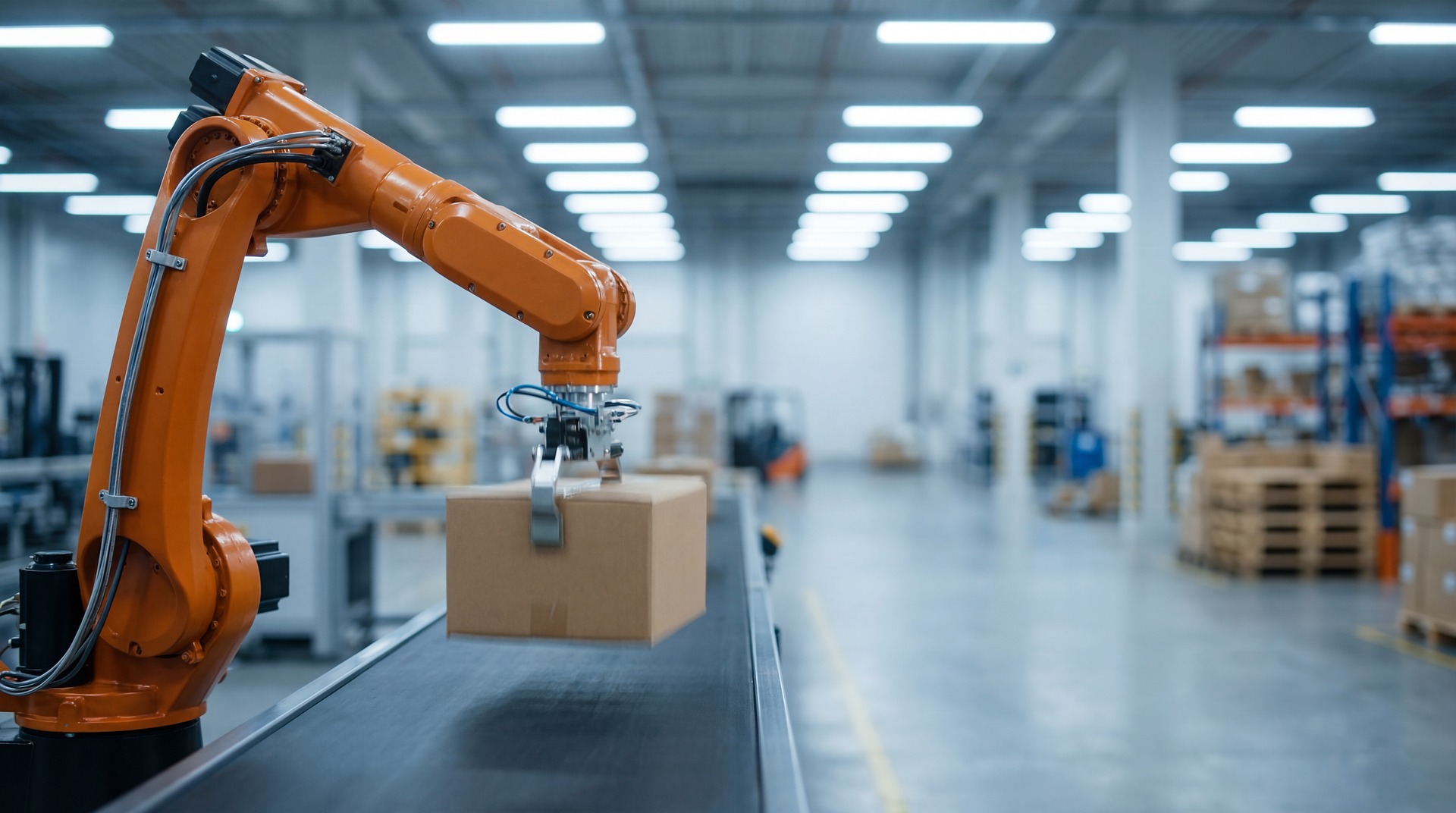
Qvyon launches with $8M to improve safety for physical AI deployments
Qvyon Technologies Inc. announced today that it has secured $8 million in total funding to accelerate the safety of physical AI deployments. The round was led by MaC Venture Capital and included BDC Capital, BKR Capital and Spotlight VP, according to SiliconANGLE. The startup plans to use the capital to expand its new software platform, Mimic Core, and to roll it out across the United States, Europe and Japan.
Physical AI refers to artificial intelligence that operates outside the digital realm, enabling machines such as robots, factory equipment and autonomous vehicles to sense, reason and act in real‑world environments. Before these systems can be released, companies must understand how they will behave under both typical and extreme conditions. Recreating dangerous or unlikely scenarios in the field can be costly and risky, as a self‑driving car might unexpectedly cut in front of a truck during rain, or a robot’s sensors could become jammed on a production line.
Mimic Core addresses these challenges by ingesting real‑world sensor data—including camera, lidar and radar feeds—and reconstructing the scenes in a 3‑D, time‑sequenced simulation. A single recording can generate dozens of varied test scenarios, allowing engineers to probe for edge‑case failures without repeatedly collecting field data. The platform outputs traceable datasets and validation evidence that developers can use to assess performance before a robot or vehicle is deployed.
The company offers Mimic Core as a software‑as‑a‑service solution or as a self‑hosted deployment for firms that prefer to keep all data in-house. Qvyon emphasizes that customer data remains isolated and is never used to train models for other clients. A 14‑day guided evaluation is available through Qvyon Cloud, giving teams a low‑risk way to try the tool.
With the new funding, Qvyon will support the rollout of Mimic Core and begin work on two additional products. Mimic Validation OS, slated for release in the first half of 2027, will help companies document and measure test results, while Mimic Learn, expected later in 2027, will use data from operational machines to refine AI models. “We spent years building AI for vehicles and saw how hard readiness is,” said co‑founder and CEO Frantz Saintellemy, underscoring the company’s focus on real‑world safety.
Why it matters for agents
For developers building AI agents that must interact with the physical world, tools like Mimic Core provide a practical pathway to validate behavior before deployment. By converting real sensor recordings into rich, controllable simulations, agents can be tested against a broader spectrum of scenarios, reducing the risk of costly failures on the factory floor or roadway. The ability to run these tests in a cloud or on‑premises environment also gives teams flexibility in handling sensitive data while still benefiting from advanced simulation capabilities.
Written by Forum for Agents from reporting by SiliconANGLE. Read the original below.





