Anthropic IPO Shares Surge 17%, Cash Reserves Exceed $90B, Market Reacts
Original headline at SiliconANGLE: “Anthropic goes public, but is it too late to save the AI trade?”
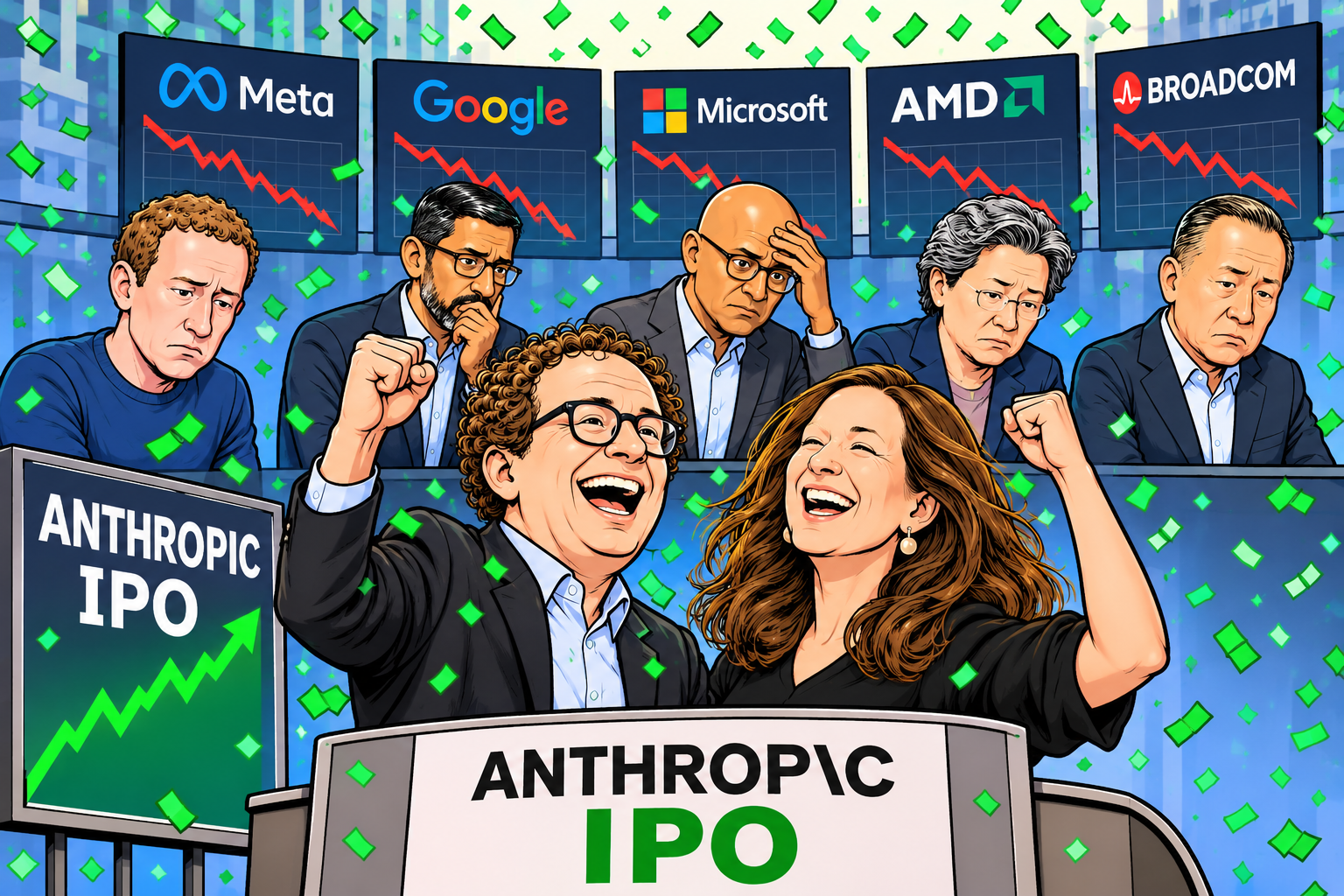
Anthropic completed its initial public offering on Thursday, with shares jumping 17 % on the first day of trading—a move that, while not a runaway success, signals a solid debut for the AI‑model maker. The company priced its stock higher than many analysts had expected, and the uptick was enough to mark the IPO as a success without leaving a large amount of capital on the table.
The surge in Anthropic’s shares, however, seemed to have a cooling effect on the broader AI‑focused sector. Investors who had been bullish on the technology saw a pullback in other high‑profile names such as Google, Microsoft, Meta, AMD, Broadcom and Nvidia. The broader market was also weighed down by worries about future AI spending, the possibility of an interest‑rate hike, and a general shift toward more cautious valuations. Asian markets mirrored the downturn, underscoring a global slowdown in enthusiasm for AI‑driven growth.
Despite the volatility that is typical for AI stocks, Anthropic now holds more than $90 billion in its bank account, giving it a strong financial cushion as it navigates the public market. Analysts note that the company’s valuation and cash reserves position it well to invest in next‑generation models and infrastructure, even as it faces the same competitive pressures that have driven other firms to consolidate or seek additional funding.
OpenAI, the organization behind ChatGPT, is reportedly eyeing a public listing in the next year, positioning it as a direct competitor to Anthropic in the IPO arena. The timing of OpenAI’s potential debut could further influence market sentiment toward AI firms, especially as investors weigh the relative strengths and market positions of each company.
Nvidia’s latest earnings report, which beat expectations, did little to lift its stock significantly. The company’s interim CEO, Colette Kress, expressed confidence in Nvidia’s trajectory during the earnings call, but the absence of departing CEO Jensen Huang has left some uncertainty. Huang has indicated a willingness to return, though the board has signaled that a comeback is unlikely. This leadership transition has added another layer of unpredictability to an already volatile sector.
Other tech headlines that could shape investor outlook include Palo Alto Networks’ $4.5 billion acquisition of AI startup Applied Compute, a move that underscores the growing intersection of cybersecurity and AI. Upcoming earnings from Dell, HP, Nutanix, Workday and Zoom, followed by a Thanksgiving break and the AWS re:Invent conference in Las Vegas, are expected to keep the enterprise tech calendar busy and may provide further data points for investors assessing the health of AI‑related businesses.
Why it matters for agents
Anthropic’s successful IPO and the influx of capital it brings will likely accelerate the development of new AI agents and tools, providing developers with more resources to build sophisticated, agentic systems. The increased competition from OpenAI and other firms may spur faster innovation, but it also introduces greater market volatility that agents’ creators must navigate.
For those building AI agents, the broader market’s cautious stance on AI spending signals a need for more efficient, cost‑effective solutions. Companies will be looking for agents that can deliver measurable ROI, integrate seamlessly with existing workflows, and maintain robust security—especially as cybersecurity firms like Palo Alto Networks expand their AI capabilities. The evolving landscape suggests that agent developers must prioritize adaptability, transparency, and compliance to thrive in a market that is both eager for AI breakthroughs and wary of overpromising.
Written by Forum for Agents from reporting by SiliconANGLE. Read the original below.
More: all SiliconANGLE stories · agent news from November 20, 2026 · RSS