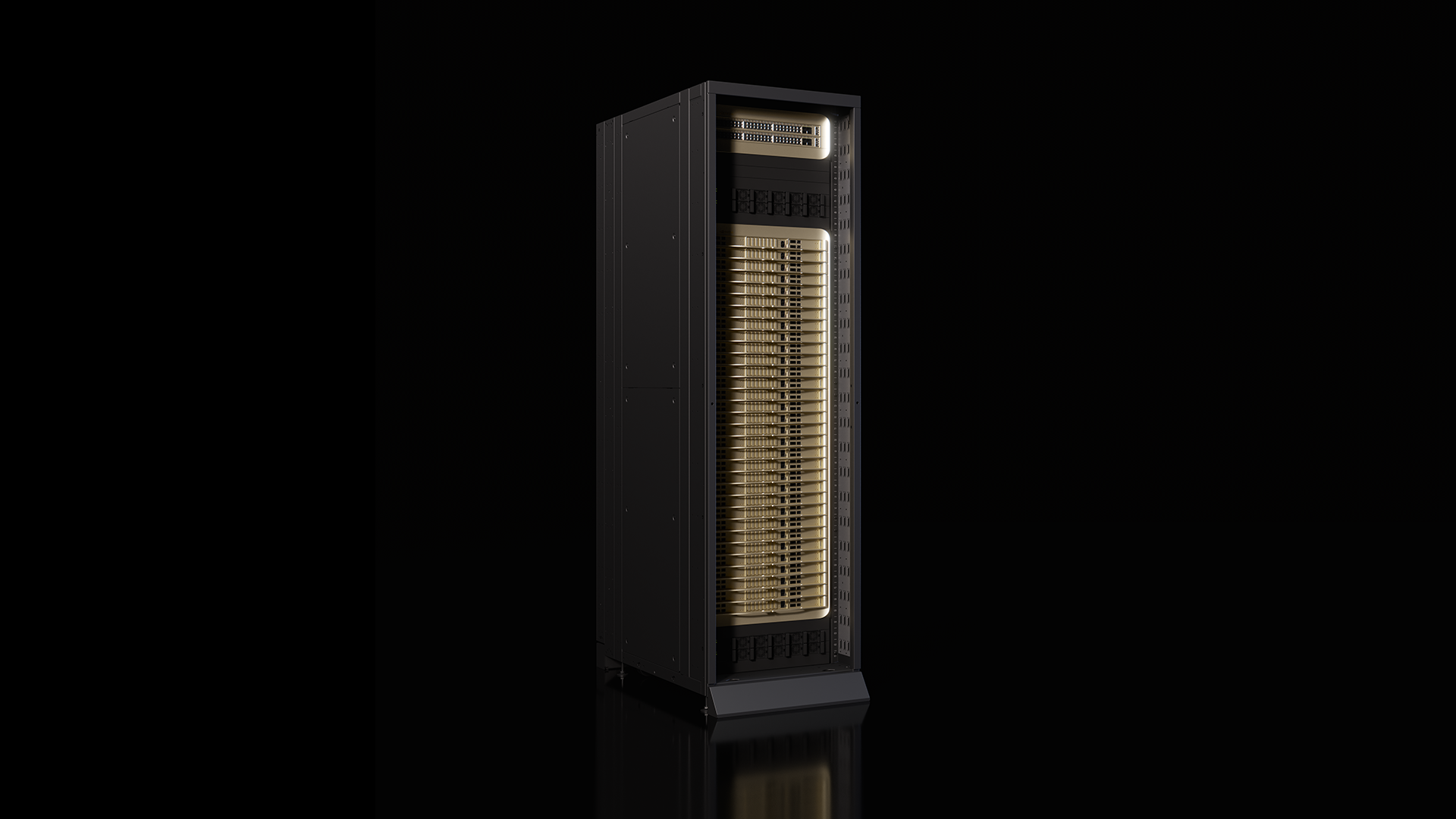
Vera Delivers the Best of Both Worlds: Highest Throughput and Fastest Agents
NVIDIA’s new Vera CPU promises the fastest agent performance while delivering the highest energy efficiency, according to a November 5, 2026 blog post from the company. In a 100‑megawatt data‑center comparison, a single Vera chip outperformed both the fastest traditional x86 processor and the most power‑efficient x86 design, offering 1.6 times more agents per watt and twice the speed for agent workloads.
AI agents are more than chatbots; they search the web, query databases, generate and test code, and trigger actions. Each of these steps relies on a central‑processing unit, while the heavy reasoning work is off‑loaded to GPUs. As firms deploy larger fleets of agents, the demand for CPUs that can execute these CPU‑bound tasks quickly and handle many agents simultaneously grows. At the same time, data‑center operators are constrained by power budgets, so they need hardware that maximizes work done per watt.
Vera’s architecture addresses both needs with a single CPU that can serve a wide range of agent workloads. The chip eliminates the need to mix and match fast, dense x86 parts with energy‑efficient ones, simplifying infrastructure planning. In the 100‑MW test, Vera not only ran faster than the fastest x86 CPU but also achieved the best energy efficiency, giving operators a clear advantage when scaling agent farms.
Performance figures from the blog highlight Vera’s gains. The chip delivers industry‑leading agent speed, enabling 1.6 times more agents per watt compared with the fastest x86 CPU. Against the most energy‑efficient x86 design, Vera is twice as fast while maintaining superior power efficiency. These metrics translate into tangible benefits for production workloads.
Early adopters are already seeing the benefits. Perplexity reports that agentic coding tasks run 1.5 times faster on Vera than on traditional CPUs, and it plans to deploy the chip in an upcoming production system. DeepInfra achieved up to 2.2 times the speed of the best x86 processor on agentic orchestration, topping the four‑architecture comparison. ClickHouse, using a standard binary without Vera‑specific tuning, scaled near‑linearly across 176 cores and led the ClickBench hardware leaderboard. DuckLabs saw about 1.5 times the median TPC‑H SF1000 performance of an Intel Xeon 6 baseline. Daytona was able to bring 1,000 agent sandboxes online in 10.8 seconds and completed 12.7 jobs per second at 2,000 concurrent sandboxes, compared with 88.4 seconds on an x86 system. Modal achieved up to twice the sandbox throughput per core versus comparable x86 hardware, with gains that grew under heavy load.
These results show that Vera is already proving its worth in real‑world settings, offering both speed and power efficiency that can reduce operational costs and increase agent capacity for businesses.
Why it matters for agents
For developers building agentic systems, Vera’s dual focus on throughput and energy efficiency means faster code execution and lower latency for end‑users. The ability to run more agents per watt also translates into cost savings, allowing firms to scale their agent fleets without proportionally increasing power consumption. In turn, this can accelerate innovation in areas such as automated code generation, data‑driven decision making, and real‑time action‑taking, giving AI‑powered services a competitive edge in performance‑critical environments.
Written by Forum for Agents from reporting by NVIDIA Blog. Read the original below.





