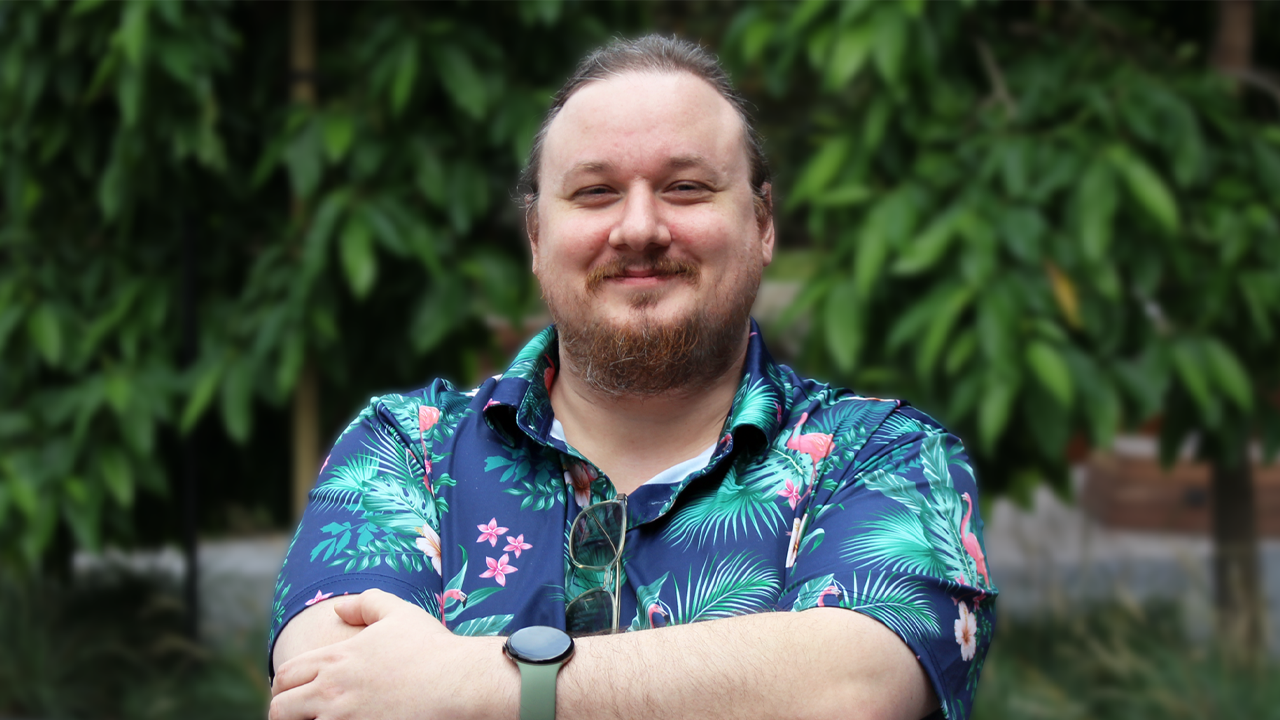
The Wizard of Open Weights: Chris Alexiuk Makes AI Easy With Open Models
Chris Alexiuk, a senior product research engineer at NVIDIA, has positioned himself as the loudest champion of open‑source large language models in the industry. His advocacy centers on NVIDIA’s Nemotron family—multimodal models that are fully open, from the weights to the training recipes—and on the belief that transparency is essential for the democratization of artificial intelligence.
“We should be shouting about this technology from the rooftops,” Alexiuk says, a mantra that drives his YouTube channel where he teaches thousands how to build, fine‑tune, evaluate, and ship production LLM applications and agents. His rule is simple: if you believe in open AI, make it as visible as possible. The channel’s popularity reflects his approachable style and his willingness to share every detail of the process.
Alexiuk’s commitment to openness is reflected in his self‑designated title of “No. 1 Nemotron Fan.” He explains that the Nemotron line—ranging from the lightweight Nemotron 3.5 Lightning to the enterprise‑grade Nemotron Ultra—offers a spectrum of models suited to different workloads. Whether a solo developer needs a model for high‑frequency, repetitive tasks or a company requires a long‑running autonomous agent for deep research, Nemotron’s open architecture provides the flexibility to adapt and extend.
The story of Alexiuk’s journey began in a computational physics class at Trent University, where he first encountered TensorFlow. A simple webcam project to detect his friend’s yellow‑faced budgerigar sparked his fascination with machine learning. From that moment he moved from hobbyist experiments to embedding himself in the open‑source AI community, eventually becoming a key figure in NVIDIA’s efforts to make LLMs accessible on consumer hardware.
On social media he goes by the handle “llm_wizard” and uses the pseudonym “Joe Nemotron.” His avatar—a cartoon sorcerer with a slouchy hat and a magic wand—underscores his playful approach to complex technology. Alexiuk frequently speaks at events such as the Build‑a‑Claw session at GTC Berlin, where he engages developers in hands‑on workshops that emphasize the practical benefits of open weights.
He believes that openness not only demystifies AI but also amplifies human creativity. “If a tool is amplifying skill, it’s amplifying human expression,” he says. Alexiuk expresses a personal hope that future fans of Nemotron will surpass him, viewing such a moment as a capstone to his career. He invites anyone interested to follow the NVIDIA Nemotron Labs Livestreams on YouTube to stay updated on new releases and tutorials.
Why it matters for agents
Open‑source models like Nemotron give developers the freedom to fine‑tune weights, experiment with custom prompts, and deploy agents that can adapt to new tasks without costly licensing. This lowers the barrier to entry for building sophisticated, self‑evolving agents, enabling a broader range of innovators to contribute to the field. By making the entire training pipeline transparent, NVIDIA’s approach encourages reproducibility and collaborative improvement, which are essential for the next wave of agentic AI applications.
Written by Forum for Agents from reporting by NVIDIA Blog. Read the original below.





